
Last updated September 20, 2026
Free on-site gate assessment - hinges, posts, and your LiftMaster or Nice gate operator checked before anything is quoted
The assessment is free and the quote is the invoice.
 Before
 After
After Before
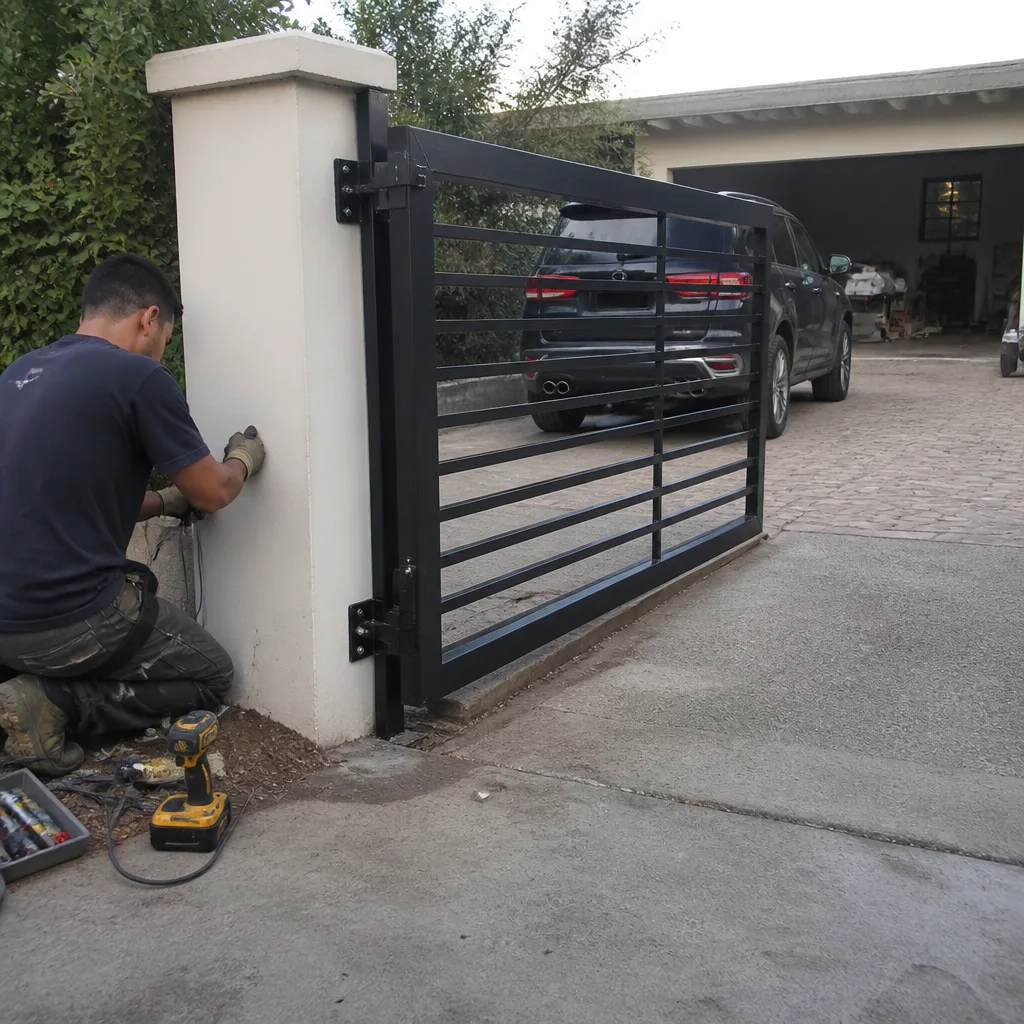 After
After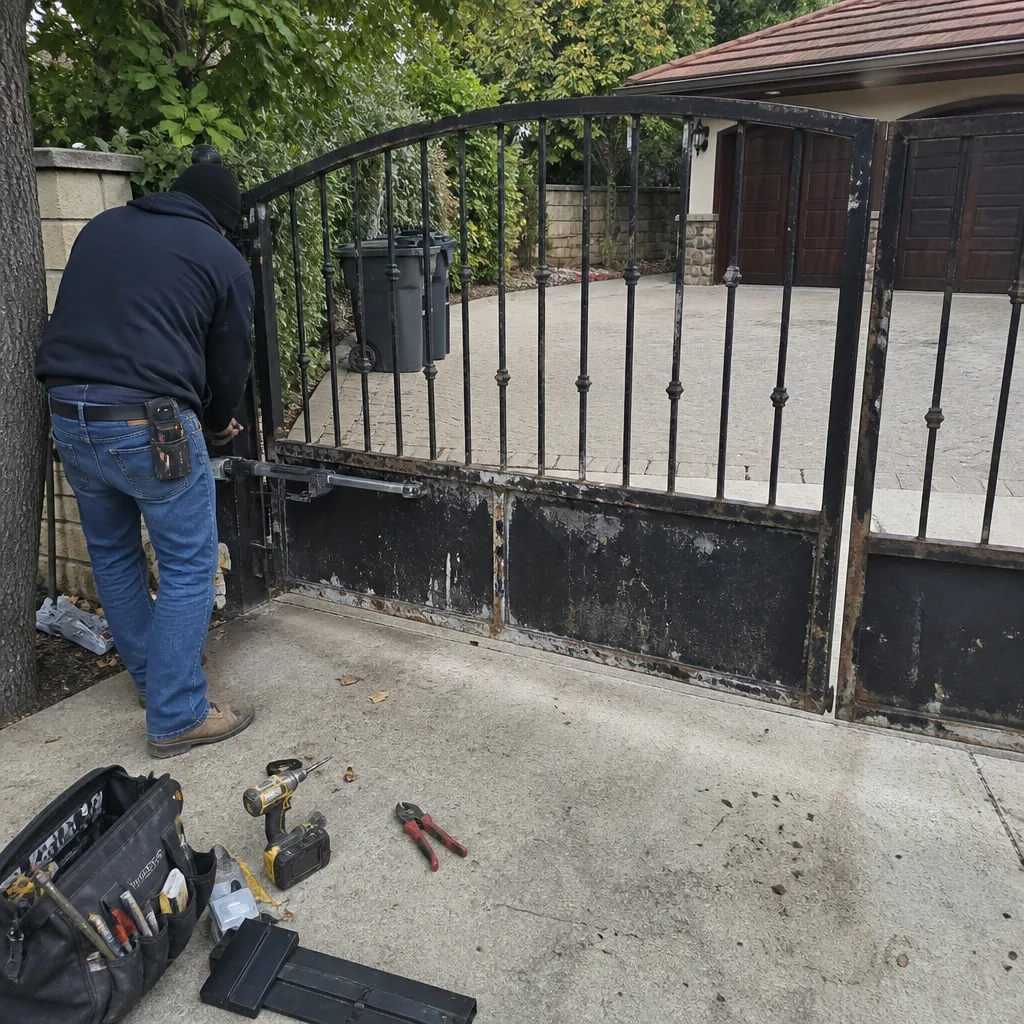 Before
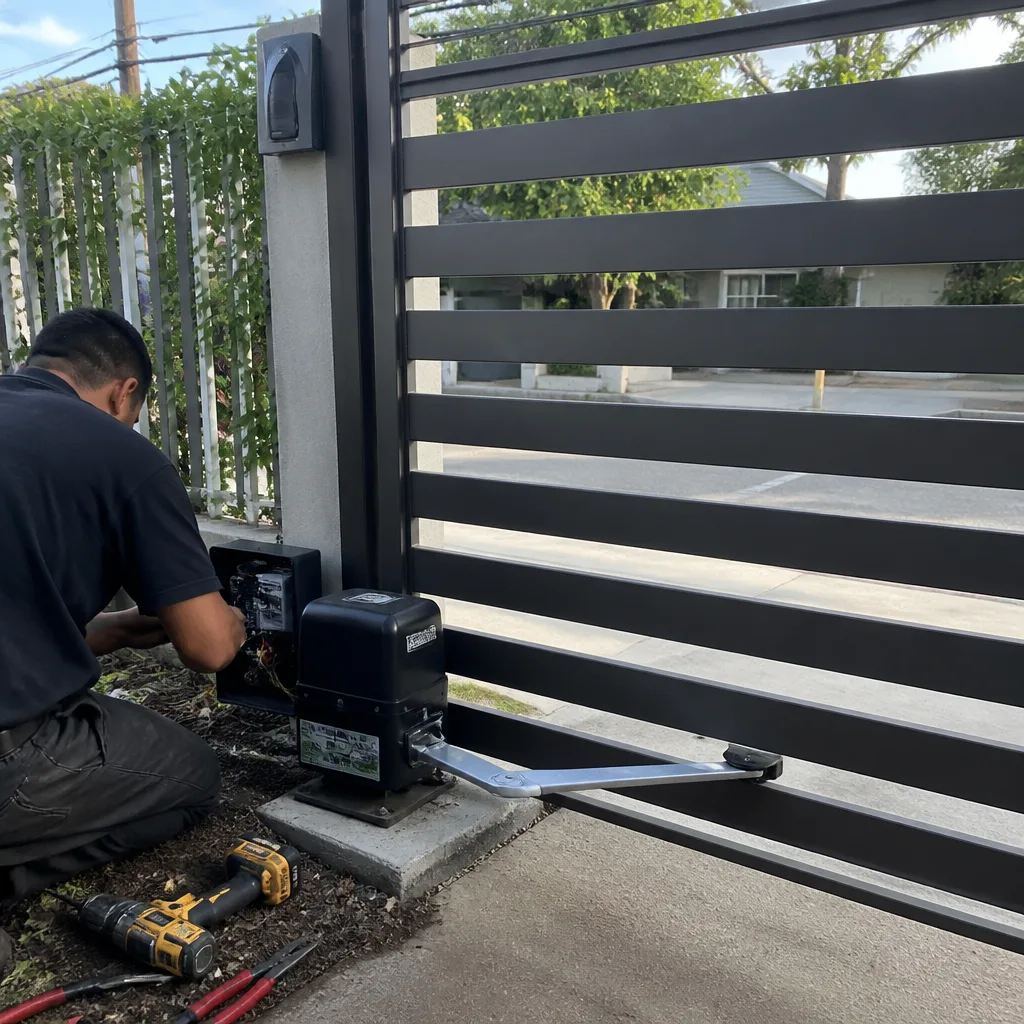 After
AfterGate Repair Permits, Codes & Inspections in CA: What You Need to Know
In 2023, a Sherman Oaks homeowner replaced a dead gate operator with a newer model from a different brand. The contractor called it a repair. The city called it an alteration. That single word difference triggered a permit requirement, an inspection, and a code violation the homeowner now owned because the safety loop hadn’t been updated to match the new operator. Most gate work in California never needs a permit, but when it does, the liability lands squarely on the property owner, not the contractor who skipped the paperwork. This guide breaks down exactly where that line sits, how UL 325 factors in, and how to get a written determination before anyone touches your gate. For related reading, see our Gate Repair Warning Signs: A Sherman Oaks Homeowner’s Reference Guide.
Quick Answer
Most gate repairs in California (swapping a circuit board, replacing a broken arm, adjusting limit switches) require no permit. But replacing a gate operator with a different model, moving a gate post, changing the swing direction, or adding a new operator to a previously manual gate is an alteration under the California Building Code, and alterations generally do require a permit. The practical test: if the work changes the gate’s original configuration, footprint, or safety system, assume a permit applies until you have written confirmation otherwise.
Table of Contents
- Repair vs. Alteration: The Legal Line That Matters
- UL 325 and Entrapment Protection: When a Permit Inspection Gets Triggered
- What Los Angeles County Actually Requires (and What Contractors Assume)
- How to Get a Written Permit Determination Before Work Starts
- Why Permit Liability Defaults to the Property Owner
- How to Protect Yourself Contractually When Hiring a Gate Contractor
- Sherman Oaks Specifics: Climate, Soil, and Code Enforcement Patterns We See
- Common Mistakes to Avoid
- When to Call a Professional
- Frequently Asked Questions
- The Bottom Line
 Before
 After
AfterRepair vs. Alteration: The Legal Line That Matters
The California Building Code (CBC) draws a specific distinction between a repair and an alteration, and that distinction determines whether a permit is required. The definition matters because it’s not intuitive. Swapping a broken part for an identical part is a repair. Swapping a broken part for a different part that performs the same function differently is, often, an alteration.
Here’s the working definition under CBC Section 202, as applied to gate work:
- Repair: Restoring a component or system to its original condition or configuration. A failed capacitor on a FAAC board gets replaced with the same capacitor. A bent hinge gets straightened or replaced with an identical hinge. No permit required.
- Alteration: Any change that modifies the existing system’s capacity, configuration, or safety characteristics. Replacing a BFT operator with a LiftMaster operator is an alteration. Adding an operator to a manual gate is an alteration. Changing a swing gate to a slide gate is an alteration. Permits generally apply.
The distinction trips people up because contractors often use the word “repair” loosely. From a contractor’s perspective, the gate was broken and now it works, so it’s repaired. From a building official’s perspective, the operator’s make, model, and safety system changed, so the work altered the installation. The homeowner in the opening example learned this the expensive way: the new operator drew more current than the old one, the existing safety loop was rated for the previous system, and the inspection flagged the mismatch as a code violation.
In Sherman Oaks, where many homes sit on lots with gates that were installed 20-plus years ago, we regularly see original operators that no longer meet current safety standards. The gate still opens, so owners assume it’s fine. It isn’t. When a technician replaces that operator with a modern equivalent, the new unit often requires entrapment protection devices the original never had. That upgrade crosses from repair into alteration territory, and the permit requirement follows.
If you’re unsure whether planned work on your Sherman Oaks gate is a repair or an alteration, the Building and Safety office for your jurisdiction can confirm in writing. We cover exactly how to request that confirmation in a later section.
UL 325 and Entrapment Protection: When a Permit Inspection Gets Triggered
UL 325 is the safety standard that governs automatic gate operators in the United States. It exists because gates have killed people, mostly children, when entrapment protection failed or was never installed. In California, UL 325 compliance is not optional, and it becomes a permit inspection trigger in specific situations.
Since 2000, every automatic gate operator installed or significantly altered must comply with UL 325, which mandates entrapment protection devices: photo-eyes (infrared beams that detect obstructions in the gate’s path), contact edges (pressure-sensitive strips that reverse the gate on contact), or a combination of both depending on the installation. When you replace an operator with a different model or brand, the new system must meet current UL 325 requirements. That alone can push a simple “repair” into permit territory, because the inspector verifies entrapment protection as part of the permit sign-off.
Here’s what UL 325 requires in practical terms for a typical residential automatic gate:
- Photo-eyes: A monitored beam across the gate opening that reverses the gate if anything interrupts the beam while the gate is moving. On swing gates, photo-eyes typically cover the area the gate sweeps through.
- Contact edges or edge sensors: Pressure-sensitive strips mounted on the leading and trailing edges of the gate that reverse direction on physical contact. These are mandatory on gates where photo-eyes alone cannot cover all pinch points.
- Warning signage: Every automatic gate requires visible warning placards mounted on both sides of the gate.
- Secondary entrapment protection: Depending on the gate type and operator class, a second independent entrapment protection device may be required beyond the primary system.
A gate with a failed Viking operator from 2008 probably lacks the photo-eye coverage a modern operator requires. When the replacement goes in, the contractor should install the additional photo-eyes and edge sensors. If no permit was pulled, no inspector verifies that work, and the homeowner now operates a gate that’s technically non-compliant. If that gate injures someone, the legal exposure is significant, and insurance coverage gets complicated when unpermitted work is involved.
We’ve seen this exact sequence in Sherman Oaks more times than we can count: a “quick operator swap” that skipped the permit, updated the operator but not the photo-eyes, and left the owner with a liability they didn’t know they had. The fix costs more after the fact than the permit would have cost up front.
What Los Angeles County Actually Requires (and What Contractors Assume)
Los Angeles County building requirements for gate work depend on whether the property falls under county jurisdiction or city jurisdiction. Sherman Oaks is a neighborhood within Los Angeles city boundaries, not an unincorporated county area. But many homeowners in the San Fernando Valley live near the unincorporated pockets, and even within LA city limits, gate permit requirements follow the same California Building Code framework with local amendments.
What LA City and LA County both require, per the building code and local amendments:
- Permit for new automatic gate installations: Installing a motorized gate where none existed requires a permit. This includes adding an operator to an existing manual gate.
- Permit for operator replacement with a different model: Replacing a failed operator with a different make, model, or capacity triggers a permit. Replacing with the identical model is typically a repair.
- Permit for structural changes: Moving a gate post, widening the gate opening, changing the gate’s swing direction, or replacing the gate frame itself with a different size or weight class. These are alterations.
- Electrical permit for new power runs: Running new conduit or wire from the house to the gate location requires an electrical permit, even if the gate itself is already permitted.
- No permit for like-for-like component replacement: Swapping a failed circuit board, replacing a broken hinge, changing a damaged wheel, or replacing an identical operator with the same model.
What contractors commonly assume, and get wrong:
- “It’s a repair, no permit needed.” This is the most common assumption, and it’s wrong in exactly the situations described above. The word “repair” gets stretched to cover operator swaps that are clearly alterations.
- “The homeowner can pull the permit later.” Technically true, but practically messy. Permits after the fact cost more, require opening up completed work for inspection, and can trigger code correction orders for unrelated issues the inspector notices while on site.
- “Nobody enforces gate permits.” Enforcement is inconsistent, but that’s a bad bet to make. A neighbor complaint, a property sale, an insurance claim, or a random code sweep can all surface unpermitted work years after the fact.
- “UL 325 compliance is the manufacturer’s responsibility.” The manufacturer certifies the operator. The installer is responsible for the installation meeting UL 325 on site. The homeowner owns the liability if neither one verifies it.
If you’re uncertain about your specific Sherman Oaks property’s jurisdiction or requirements, the LA Department of Building and Safety (LADBS) website and phone line can confirm. For unincorporated areas, LA County Building and Safety handles it. The important thing is getting the answer in writing, which is the next section.
How to Get a Written Permit Determination Before Work Starts
A written permit determination is the single most useful document you can have before hiring a gate contractor. It’s a letter or email from the building authority stating whether specific planned work requires a permit. The determination takes the guesswork out of the contractor’s hands and puts the answer on record.
Here’s the step-by-step process for getting one:
- Document the existing gate. Take photos of the gate, the operator, the control board, and any visible safety devices. Note the operator’s make and model if it’s legible.
- Write a one-paragraph description of the planned work. Be specific: “Replace existing FAAC 740 operator with LiftMaster LA400 operator, no change to gate size, swing direction, or post location. Existing photo-eyes to be retained and reconnected.”
- Contact the building authority for your jurisdiction. For Sherman Oaks, that’s LADBS. For unincorporated areas of the Valley, that’s LA County Building and Safety. Most offices accept email inquiries and respond within a few business days.
- Request the determination in writing. Ask specifically: “Please confirm in writing whether a permit is required for the work described.” Don’t accept a verbal answer as final.
- Keep the written determination with your property records. If you ever sell the home or file an insurance claim, the determination is your evidence that you asked and followed the answer given.
LADBS does charge for some formal determinations, but a simple “does this require a permit” email question is typically answered without a fee. The response might be informal, but it’s still written, and still useful.
One practical note: a written determination protects you from the “the contractor said it was fine” defense, which never holds up. The building authority’s answer is what matters, not the contractor’s opinion. Getting that answer in writing is cheap insurance against a correction notice down the line.
Why Permit Liability Defaults to the Property Owner
California law places the responsibility for obtaining required permits on the property owner. Not the contractor. The contractor can pull the permit on your behalf, and most reputable ones do, but the legal obligation ultimately sits with whoever owns the property.
Here’s how that plays out in practice:
- Code enforcement actions name the property owner. If unpermitted work is discovered, the correction notice goes to the owner of record, regardless of who did the work or who said no permit was needed.
- Penalties accrue to the property, not the contractor. Late permit fees, doubled permit fees, and correction costs attach to the property. When the property sells, unresolved code issues become the seller’s problem during escrow.
- Insurance claims get complicated. If a gate installed without a required permit causes damage or injury, the homeowner’s insurance may deny the claim or seek recovery from the homeowner for the unpermitted condition.
- The contractor’s liability is limited to what the homeowner can prove in court. You can sue a contractor who told you no permit was needed. You’ll spend time and money doing it, and collection is never guaranteed. The code violation, meanwhile, stays with you.
We’ve worked with Sherman Oaks homeowners who discovered unpermitted gate work during a sale. The typical sequence: the buyer’s inspector flags the gate operator as newer than the home’s permit history, the seller can’t produce a permit, and the sale stalls while the seller rushes to file a retroactive permit and schedule an inspection. By that point, the contractor who did the work is long gone, and the seller owns the fix.
The protection is straightforward: verify permit requirements yourself, in writing, before work starts. Don’t delegate that judgment to the contractor. The contractor’s incentive is to close the job quickly. Yours is to not own a code violation.
How to Protect Yourself Contractually When Hiring a Gate Contractor
The contract is your leverage. A well-written gate repair or installation contract should address permits explicitly, so the question of who’s responsible doesn’t become a dispute later. See How to Hire a Gate Repair Contractor in Sherman Oaks: A Step-by-Step Guide for what to include.
Here’s what your contract should include, in writing:
- Permit responsibility clause. A sentence stating which party is responsible for determining permit requirements, which party files the permit if one is required, and who pays the permit fee. If the contractor states no permit is needed, the contract should say that, with the contractor’s company name attached to the statement.
- Scope of work in plain language. Not “repair gate.” Something like: “Replace existing operator with LiftMaster LA400, including installation of two additional photo-eyes and one contact edge to meet UL 325 entrapment protection requirements.” The specificity protects you when a dispute arises.
- Written price before work starts. This is non-negotiable. The price agreed before the first tool is picked up is the price paid. Under our own Haven Standard, Clause 1 puts this in writing on every job, every time. No verbal estimate, no surprise line items added at the end.
- UL 325 compliance statement. A line confirming that all entrapment protection devices will be installed and tested to meet current UL 325 standards, with photo documentation of the installed devices delivered at completion.
- Change order process. A written statement that any scope change requires a written change order signed by the homeowner before the additional work proceeds.
Most gate contractors in Sherman Oaks won’t have a contract that covers all five points. Some will. The ones who push back on a written permit responsibility clause are usually the ones who know they’ve been skipping permits for years. Our Gate Repair in Sherman Oaks work always includes written documentation: what was found, what was set, what was installed. That record protects the homeowner whether or not a permit was required.
Sherman Oaks Specifics: Climate, Soil, and Code Enforcement Patterns We See
Sherman Oaks has specific conditions that affect gate installations and the code picture around them. The soil along the hillsides south of Ventura Boulevard shifts with the wet-dry cycle, and gates on those slopes pick up alignment problems faster than gates on flat lots north of the Boulevard. A gate that’s out of alignment stresses the operator, which shortens operator life, which triggers more operator replacements, which raises the permit question more often.
The climate matters too. Sherman Oaks sees hot, dry summers that bake exposed gate components and photoelectric eyes, followed by a winter wet season that causes the clay-heavy soil to swell and contract. Gates on the hillside lots south of Ventura Boulevard deal with more movement than gates in the flats. We see more hinge failures, more post shifts, and more operator burnout in those hill areas as a result.
Code enforcement in Sherman Oaks tends to be complaint-driven rather than proactive. A gate that’s been unpermitted for ten years will likely stay that way until a neighbor complains, the property goes up for sale, or an insurance claim triggers an inspection. That lulls homeowners into assuming unpermitted work doesn’t matter. It matters when it matters, and by then the cost is always higher.
One pattern worth knowing: LA City has been tightening enforcement on unpermitted automatic gate installations in residential zones over the last several years, largely driven by liability concerns around entrapment injuries. The Sherman Oaks neighborhoods with newer gate installs are seeing more inspection activity than they did a decade ago. If your gate operator was installed after 2022 and you can’t find a permit record, it’s worth checking with LADBS now, before a sale or a complaint forces the issue.
Common Mistakes to Avoid
- Taking the contractor’s verbal “no permit needed” as final. The contractor doesn’t absorb the liability if they’re wrong. Get the determination from the building authority in writing before work starts.
- Replacing an operator with a different brand and calling it a repair. A different make and model changes the safety system profile, which is an alteration. Assume a permit applies until told otherwise in writing.
- Ignoring UL 325 entrapment protection on an operator swap. A newer operator with old photo-eyes, or no photo-eyes, is a code violation waiting to be discovered. Update the safety devices when you update the operator.
- Hiring a contractor who won’t state the permit position in the contract. If the paperwork doesn’t address permits, the contractor is leaving themselves room to say “that wasn’t my responsibility” later.
- Skipping the permit because “nobody checks.” Enforcement is inconsistent, but a property sale, insurance claim, or neighbor complaint changes that instantly. The retroactive fix always costs more.
- Letting electrical work slide into the gate job without a separate permit discussion. New power runs, new conduit, new breakers, all require electrical permits. Some gate contractors quietly include the electrical work and skip that permit too.
- Buying a home in Sherman Oaks without checking the gate operator’s permit history. During due diligence, pull the permit history for the address. An unpermitted operator becomes your problem the day you close.
When to Call a Professional
If any of these situations describe your Sherman Oaks gate, call a professional-such as our Gate Repair services-before making changes: your operator is dead and you’re considering a replacement with a different model or brand; you want to motorize a manual gate; you’re moving a gate post or changing the gate’s opening; you’re running new power to the gate location; or you’ve discovered the previous work was unpermitted and need someone to assess what’s required to bring it into compliance. Each of these carries permit implications that are cheaper to handle correctly up front.
Vance Gate Repair Sherman Oaks offers free estimates in Sherman Oaks. We’ll assess the gate, tell you in writing what the work involves, and confirm the permit picture for your specific situation. Call (213) 463-6296.
Frequently Asked Questions
Replacing a failed operator with the identical make and model is generally considered a repair and requires no permit. Replacing it with a different model or brand, or adding an operator to a previously manual gate, is an alteration and generally requires a permit. Confirm with your local building authority in writing before work starts. For exact guidance on your Sherman Oaks property, call (213) 463-6296.
A repair restores the gate to its original condition or configuration, like replacing a failed circuit board with the same board. An alteration changes the gate’s configuration, capacity, or safety system, like swapping a Viking operator for a LiftMaster model. Alterations carry permit requirements that repairs do not.
Yes. UL 325 applies to all automatic gate operators, residential included, and mandates entrapment protection devices such as photo-eyes and contact edges. When a permit inspection occurs, the inspector verifies UL 325 compliance as part of the sign-off.
If discovered, unpermitted work triggers a correction notice from the building authority, with fees and the requirement to file a retroactive permit and pass an inspection. Discovery most commonly happens during a home sale, an insurance claim, or a neighbor complaint. The property owner bears the correction cost, not the original contractor.
Yes, and reputable contractors typically do. But the legal responsibility for ensuring the permit is obtained remains with the property owner. Get the permit responsibility stated in writing in your contract, and keep the permit records after the work is done.
Gate permit fees in LA City and LA County vary based on the scope of work and the project valuation. Simple operator replacement permits are typically in the low hundreds of dollars. Late or retroactive permits generally cost more. For an exact current figure, contact LADBS or LA County Building and Safety directly. You can also browse more guides & resources on gate compliance and maintenance.
The Bottom Line
Most gate repairs in California need no permit, but the moment the work changes the gate’s operator model, footprint, swing, or safety system, it becomes an alteration and permits generally apply. The property owner owns the liability when the permit gets skipped, and the cost of fixing unpermitted work after the fact always exceeds the cost of doing it right the first time. Get a written permit determination before work starts, put permit responsibility in the contract, and keep documentation of everything. In Sherman Oaks, where gates face real climate and soil stress, the question isn’t whether your gate will need work eventually. It’s whether that work will be documented, permitted, and safe. With any Gate Installation in Sherman Oaks or Gate Motor & Opener in Sherman Oaks project, having the record matters as much as having the repair done.
For a free estimate on gate repair, installation, or a permit compliance review in Sherman Oaks, call Vance Gate Repair at (213) 463-6296. We write the price down before work starts, and we leave the documentation when we go. That’s how it should work.
Written by Adrian Vance, Owner at Vance Gate Repair Sherman Oaks, serving Sherman Oaks since 2014. Return to the Vance Gate Repair Sherman Oaks home page for more on our gate repair services.