
Last updated September 20, 2026
Free on-site gate assessment - hinges, posts, and your LiftMaster or Nice gate operator checked before anything is quoted
The assessment is free and the quote is the invoice.
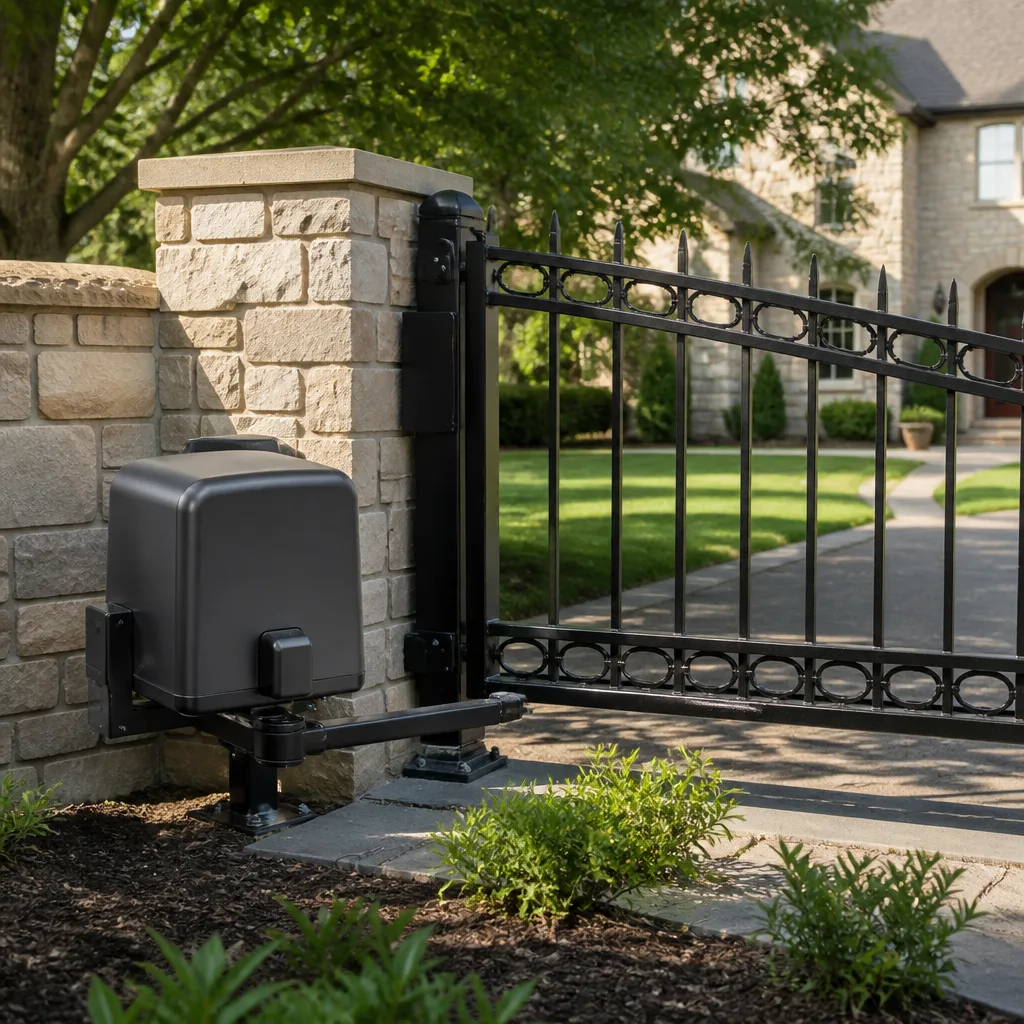
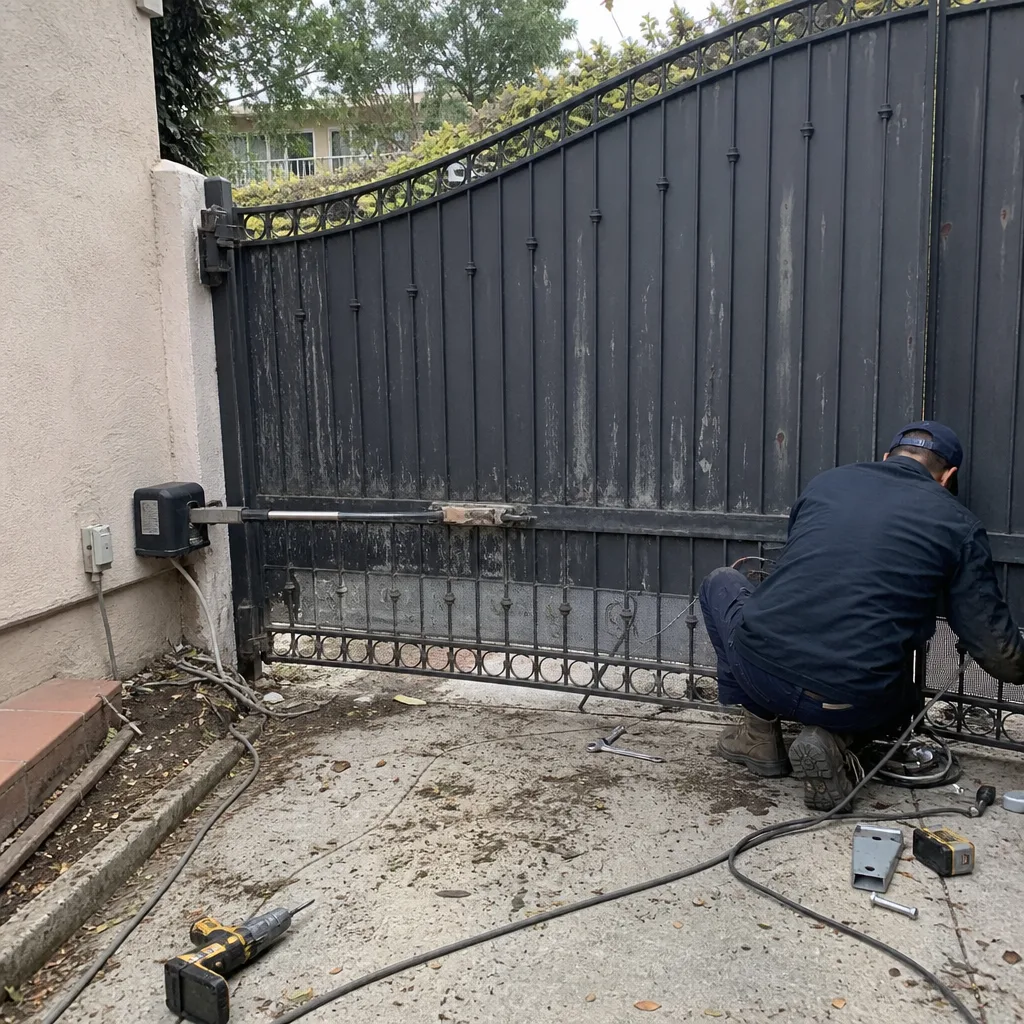 Before
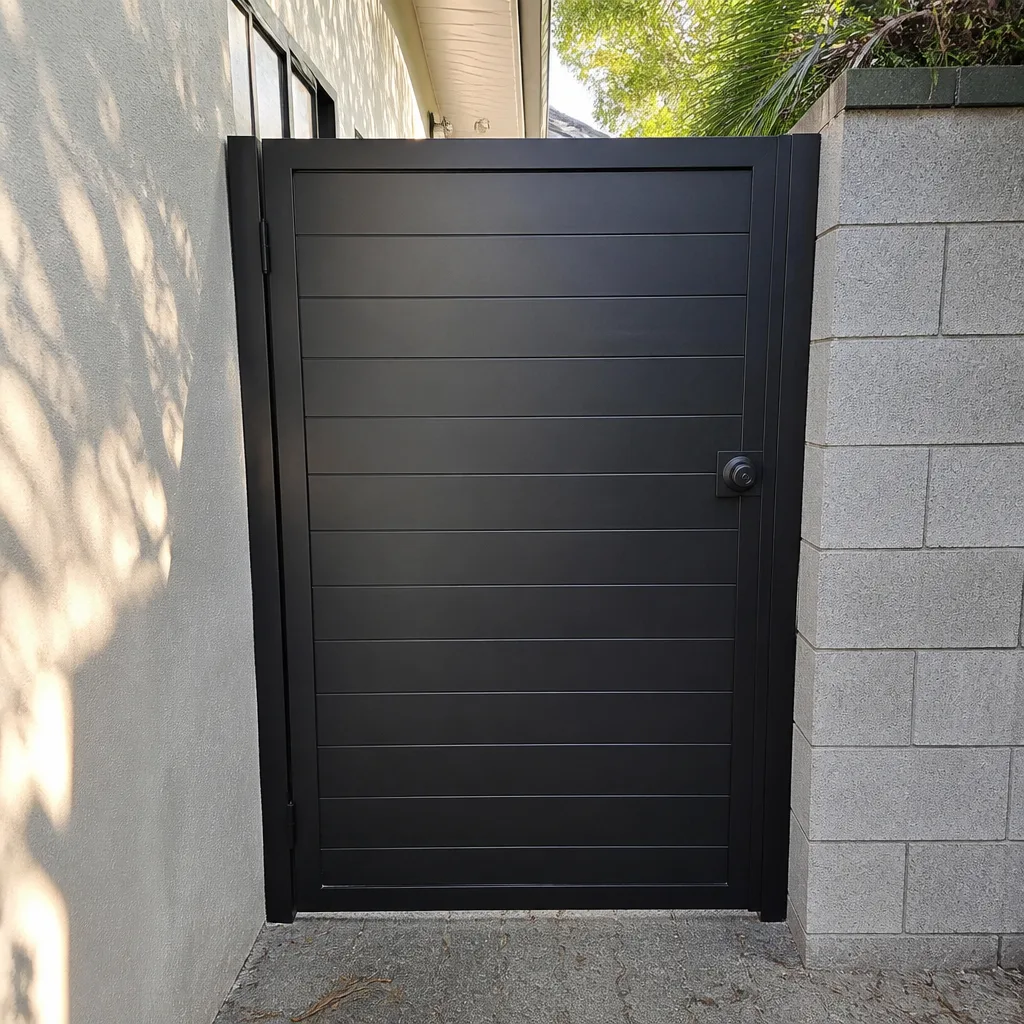 After
After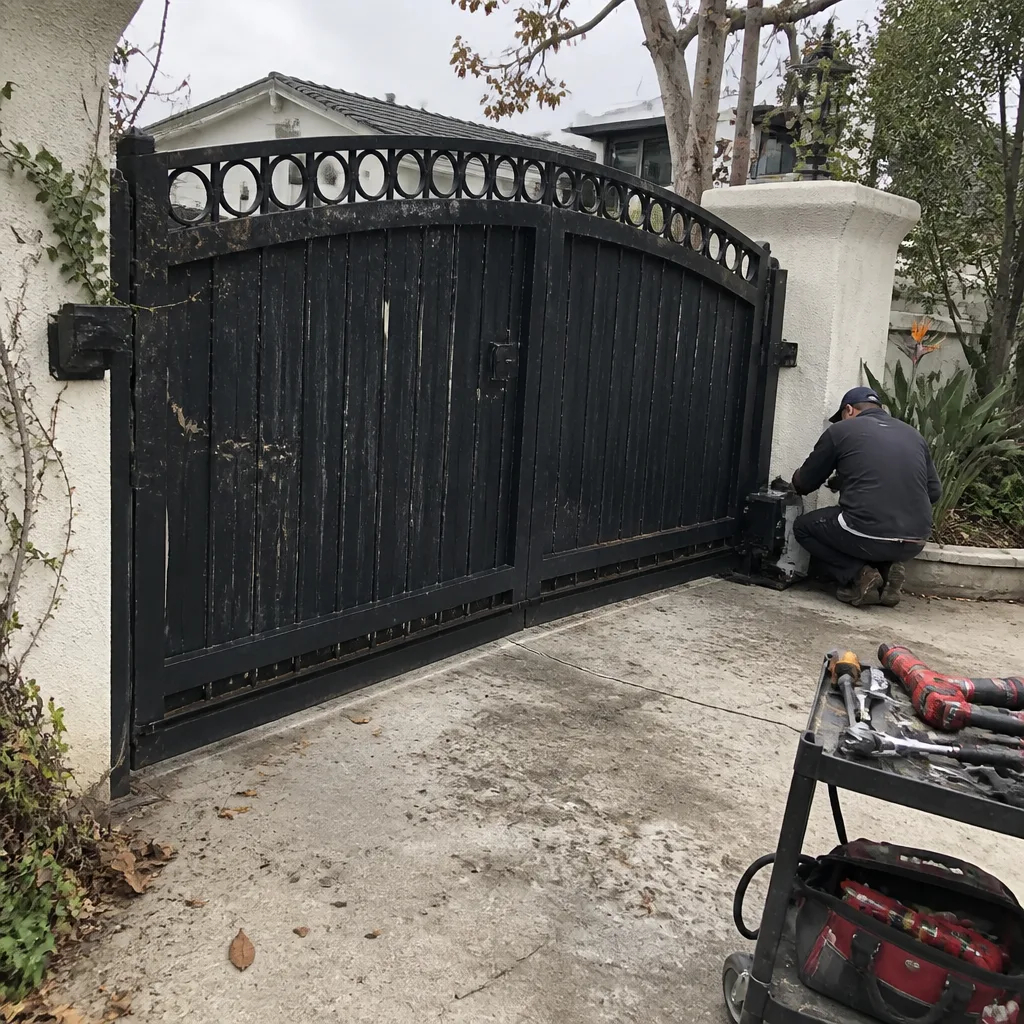 Before
 After
After Before
 After
AfterGate Repair Warning Signs: A Sherman Oaks Homeowner’s Reference Guide
Most Sherman Oaks gate failures announce themselves weeks before the gate actually stops working. The problem is that the early signals are easy to dismiss as quirks: a half-second hesitation, a faint scrape, a motor that sounds slightly different than it did last spring. This guide assigns each warning sign a severity tier and a decision. You’ll learn which sounds point to which components, how to photograph a symptom so a technician can actually use the record, and which “minor” signs we’ve watched precede complete failure within 60 days on hillside and flat-lot properties across Sherman Oaks.
Quick Answer
The three most urgent Gate Repair services warning signs in Sherman Oaks are a gate that reverses mid-travel, a motor that hums without moving the gate, and visible sagging at the hinge line. A gate that reverses is a safety-loop or limit-switch fault that can produce an entrapment event; a humming motor under load usually points to a failed capacitor or stripped gear before the motor burns out entirely. Any one of these three means stop using the gate and call a technician today. Everything else in this guide falls into either monitor-for-30-days or schedule-within-two-weeks.
Table of Contents
- The Three-Tier Severity System
- Operator Warning Signs vs. Structural Warning Signs
- What That Sound Actually Means: Grinding, Clicking, and Humming
- Tier One: Observable and Monitor (30 Days)
- Tier Two: Schedule Within Two Weeks
- Tier Three: Stop Using the Gate Now
- How to Photograph and Log a Warning Sign
- The Signs Most Often Misread Before a 60-Day Failure
 Before
 After
AfterThe Three-Tier Severity System
Warning signs are not all equal, and treating them as equal is the most common mistake we see in Sherman Oaks. A gate that hesitates two seconds before moving is not the same problem as a gate that reverses mid-travel. One is a friction issue building over weeks. The other is a safety loop or limit-switch fault that can produce an entrapment event. Here is the tier system we use in the field:
- Tier One – Observable and Monitor: The gate works, but something is off. A new sound that comes and goes, a slight slowdown, a small spot of surface rust near a weld. Log it, photograph it, and check again in 30 days. If it has changed, move it up a tier.
- Tier Two – Schedule Within Two Weeks: The symptom is consistent and measurable. The gate scrapes every time it opens. The motor trips its breaker once a week. The remote range has dropped from 60 feet to 20 feet. The gate still functions but the trend line points down.
- Tier Three – Stop Using the Gate Now: The gate reverses mid-travel, the motor hums without moving the gate, or the gate visibly sags more than an inch at the latch end. These are not repair-later items. They are entrapment and structural failure risks.
Most gate failures we document in Sherman Oaks follow a predictable arc: a Tier One sign appears, gets ignored for six to eight weeks, jumps to Tier Two, gets ignored for two more weeks, then fails as a Tier Three event that costs two to three times what the original repair would have. The tier system exists to interrupt that arc.
Operator Warning Signs vs. Structural Warning Signs
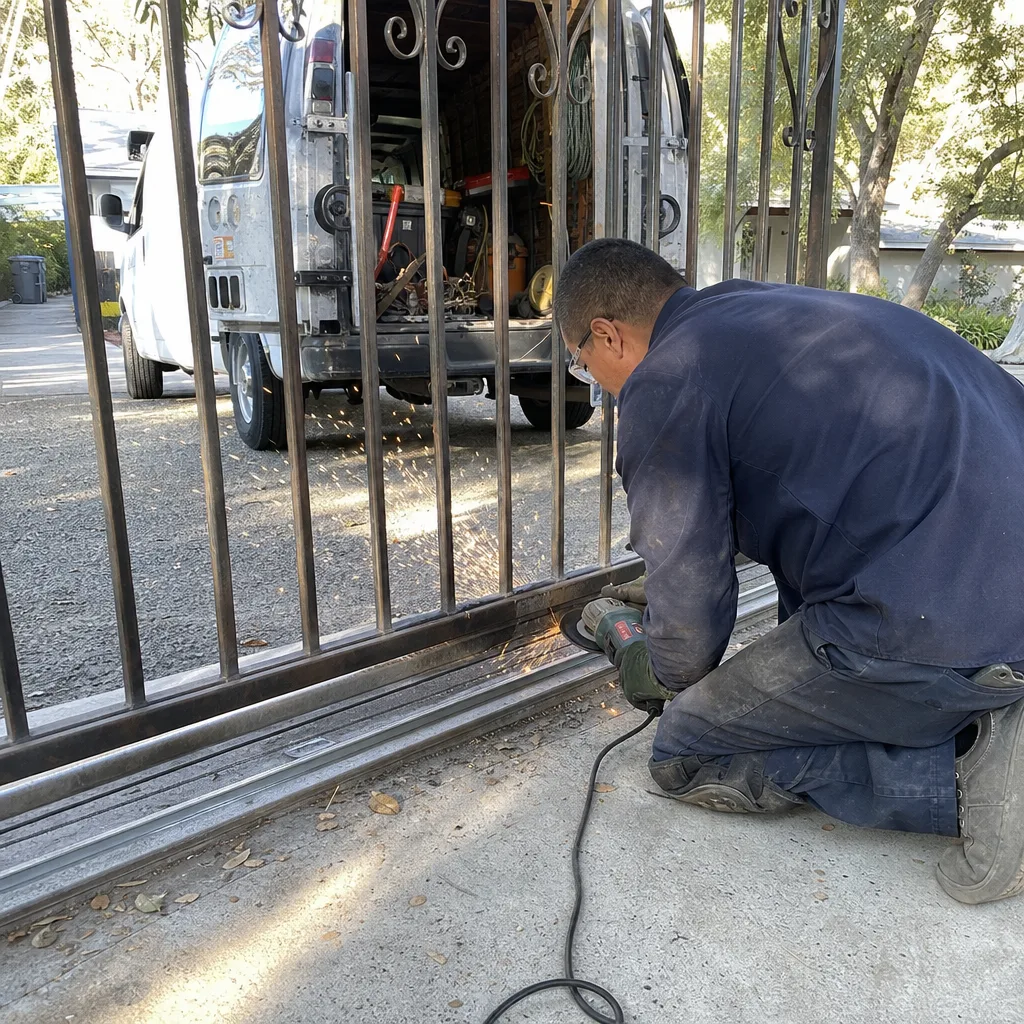
Every automatic gate has two systems: the operator (motor, control board, limit switches, safety loops, receivers) and the structure (posts, hinges, gate frame, wheels, track). They fail differently, point to a different repair category, and carry a different cost range. Knowing which system is talking is half the diagnosis.
Operator warning signs involve movement, sound, or response. The gate moves slower than it used to. The motor runs but the gate doesn’t move. The remote works sometimes and not others. The gate reverses before it reaches the stop. These point to the motor, the control board, or the safety circuit. In Sherman Oaks, we work on nine gate-automation brands including LiftMaster, FAAC, and Mighty Mule, and the operator is usually where the failure begins on gates under 15 years old.
Structural warning signs involve geometry and metal fatigue. The gate scrapes the driveway at a specific point. The latch no longer lines up with the receiver. A hinge has visible gap between the post and the gate frame. The gate sags at the free end. These point to the posts, hinges, frame, or foundation. Structural repairs often involve welding or post resetting and run higher than operator repairs because the labor is heavier. On hillside Sherman Oaks properties, a shifting retaining wall will quietly rotate a gate post over two or three seasons. The gate doesn’t sag; the ground underneath it moves.
The distinction matters for one practical reason: if you hear a grinding sound and you Google it, you’ll get two completely different answers depending on whether the grind is coming from the motor housing or from the hinge line. Operator sound means electrical or gear repair. Structural sound means metal-on-metal contact from misalignment. Same symptom, different system, different part of your budget.
What That Sound Actually Means: Grinding, Clicking, and Humming
Sound is the most reliable early warning system a gate has. Here is what each sound actually indicates, based on what we’ve found inside the housing after listening to the same three sounds on hundreds of Sherman Oaks driveways.
Grinding
Grinding is metal removing itself from the system. In an operator, it means the drive gear is chewing against a stripped worm gear or a broken chain sprocket. In the structure, it means the gate frame is dragging against a post, a hinge pin, or the driveway surface. Operator grinding gets worse quickly because the damaged gear sheds more metal with each cycle, which accelerates the wear. Structural grinding is slower but it’s reshaping the contact point. A gate that grinds every time it opens should be Tier Two at minimum. A gate that grinds and shudders at the same time should be Tier Three.
Clicking
A rapid clicking when you press the remote usually means the control board is receiving a signal but refusing to act, which points to a limit switch that’s out of position, a safety loop that’s reporting a false obstruction, or a locked rotor. A single solid click from the housing when the gate starts or stops is often the contactor or relay engaging, and that’s normal on older models. The diagnostic pattern we use: rapid repeating click is electronic, single heavy click is mechanical.
Humming Under Load
A motor that hums while the gate stays still is a Tier Three sign. The motor is trying to turn but something is preventing it. On a swing gate, that’s usually a seized gear or a failed capacitor that isn’t providing enough starting torque. On a slide gate, it’s often a broken chain, a wheel that’s off the track, or a gearbox that’s bound up. The hum is the sound of the motor destroying itself thermally while it waits for movement that isn’t coming. This is not a monitor situation. Cut power to the operator and call a technician.
Tier One: Observable and Monitor (30 Days)
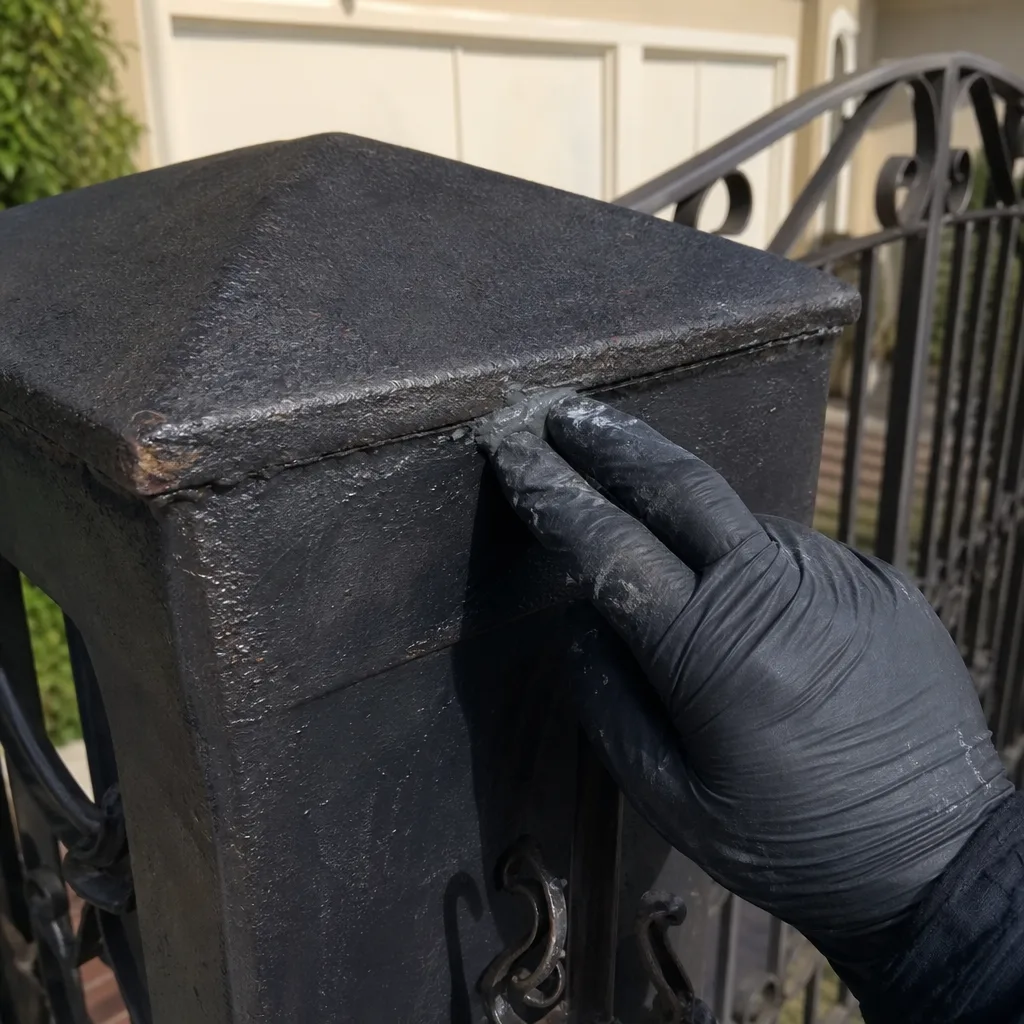
Tier One signs are changes you notice but that don’t yet affect function. The gate opens and closes. It just doesn’t feel exactly the same as it did a month ago. These are worth logging, worth photographing, and worth a 30-day check-in. They are not worth an emergency service call.
New light surface rust at a weld joint
Surface rust on a Sherman Oaks gate is usually cosmetic for the first year or two, especially on powder-coated steel. What you’re watching for is rust at the hinge welds or at the base of the gate frame where water collects. That’s a structural location, not a paint location. Log a photo with a reference point and check it in 30 days. If the rust has spread or the metal sounds hollow when tapped, move to Tier Two.
Remote range has dropped slightly
If your remote used to open the gate from the corner and now only works from 30 feet out, that’s a Tier One signal. It could be a weakening battery in the remote, interference from a new neighbor’s installation, or the receiver antenna beginning to fail on the control board. Replace the remote battery first. If the range is still short, log it and monitor.
Gate moves one beat slower than it used to
This is subjective, which is why it’s Tier One. A gate that slows by 15% over two months may be nothing more than seasonal temperature change, which affects hydraulic fluid and some capacitor-driven motors. Or it may be the first measurable evidence of increasing friction in the hinge line or the gearbox. Count the open time now. Count it again in 30 days. A trend is more useful than a feeling.
Tier Two: Schedule Within Two Weeks
Tier Two signs are consistent and measurable. The gate still functions, but the symptom is not going away on its own and is probably getting worse. Schedule a repair call within two weeks. In our experience across Sherman Oaks, two weeks is the window where a Tier Two problem usually stays a Tier Two problem.
The gate scrapes at a specific point on every cycle
A scrape that happens every time at the same point means something has moved out of alignment: a hinge bushing is worn, a post has shifted, or the gate frame itself has begun to flex. The scrape is metal contact, and every cycle makes the contact point worse. It’s usually a hinge replacement or a modest adjustment on a swing gate, or a wheel or track alignment on a slide gate. On flat-lot Sherman Oaks properties, driveway settlement is a common cause; the slab drops a quarter inch over two seasons and the gate suddenly starts catching the high spot.
The motor trips its breaker or GFCI once a week
Gate operators should never trip a properly sized breaker. If yours does, the motor is drawing more current than the circuit was designed for, which points to increasing mechanical resistance, a failing capacitor, or a control board relay that’s sticking. It’s not an electrical service problem in the house. It’s the operator telling you it’s working harder than it should. Schedule this one.
The gate reverses before it reaches the fully open or closed stop, but only occasionally
An occasional mid-travel reversal is usually an obstruction signal from a safety loop or a photo-eye that’s drifting out of alignment. A photo-eye (the infrared beam that stops the gate if something crosses the path) that’s misaligned by two inches will sometimes read the ground reflection as an obstruction and reverse. It’s intermittent now. It tends to become constant as the misalignment grows. This is Tier Two because it’s not yet a daily failure, but it’s not going to correct itself either. We’ve reset limit switches that were set 12 degrees past travel and photographed the new position; the fix is usually quick when caught here.
Tier Three: Stop Using the Gate Now
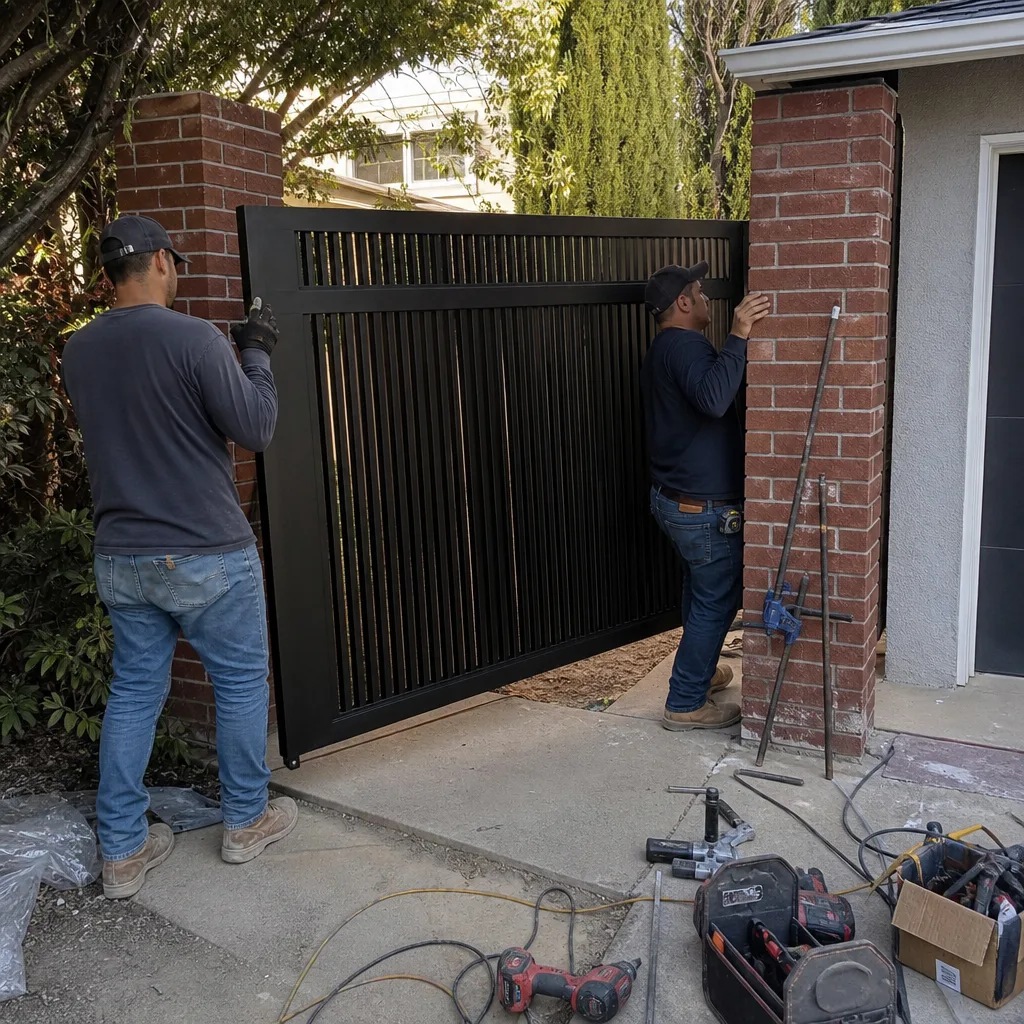
Tier Three signs mean the gate is no longer safe to operate in automatic mode. Stop using it. Disconnect the operator from the gate so the gate can’t move under power, or turn the operator to manual if you know how, and call a technician today. We list these separately because each one is a different underlying failure with a different worst-case outcome.
The gate reverses mid-travel every time
A gate that reverses every time mid-travel is reading a false obstruction. If it’s a swing gate, the entrapment risk is real: the gate is stopping and reversing unpredictably while it has the mechanical leverage to pin a person or a pet against a post. If the safety loop or photo-eye is faulting, the control board may be receiving conflicting signals. This is the highest-priority operator fault on a residential gate. Stop using the gate until it’s diagnosed.
The motor hums but the gate does not move
As covered above, this is the motor destroying itself thermally. The hum means power is reaching the motor and the motor is trying. The gate not moving means something mechanical has failed. Every second the hum continues, the windings are heating. In the worst case, the motor seizes completely and the repair moves from “replace the capacitor” to “replace the operator.” In Sherman Oaks, a full swing-gate motor replacement on a FAAC or LiftMaster unit typically runs between $800 and $1,600 depending on the model, so the difference between catching a capacitor and missing it is significant.
The gate sags visibly at the latch end
Visible sag is never just a hinge problem. It means the gate frame itself is bending, a hinge weld is failing, or the post has rotated in its footing. The gate still opens and closes, which is why homeowners keep using it, but a sagging gate is loading its hinges unevenly with every cycle, and the failure mode when a hinge lets go is a gate that drops suddenly. On a hillside Sherman Oaks property, a dropped gate can travel. Don’t use a visibly sagging gate in automatic mode.
The gate moves on its own, opens partially and stops, or won’t close completely
Any behavior where the gate does something you didn’t ask it to do is a control board or safety input fault. The board is executing a command you didn’t send. That’s unpredictable, and unpredictable is the definition of unsafe on a 300 to 800 pound moving structure. Cut power. Call a technician.
How to Photograph and Log a Warning Sign
A useful photo record is the difference between a technician who can diagnose from your description and a technician who has to come out twice. The Haven Standard we run on every job is built on this habit: document what was found, what was set, and what was installed. You can do the same thing from your side of the driveway, and it makes every future conversation faster and more honest.
- Stand back and photograph the whole gate in its closed position. This gives context: the gate type, the hinge placement, the clearance to the driveway, the operator mounting. One photo from straight on, one from the hinge side, one from the latch side.
- Photograph the specific symptom. Rust spot? Get close enough that the photo shows the texture of the metal and the edges of the affected area. Scrape mark on the driveway? Photograph the full length of the mark with something for scale, like a shoe or a quarter.
- Photograph the operator housing. The brand name and model number are usually printed on a sticker or embossed on the cover. A photo of that label saves the technician from guessing.
- Log the date, the weather, and the symptom in your phone notes. “March 14, dry, gate scrapes at the halfway point, sound is metallic.” Weather matters because some symptoms only appear when the wood or the concrete swells with moisture or contracts in heat.
- Take a video of the gate completing one full open-and-close cycle. Hold the phone steady and capture the entire gate in frame. The technician can see hesitation, hear grinding, and observe the reversal point before they ever arrive. That’s a 10-second video that saves a 45-minute diagnosis call.
When we perform Gate Repair in Sherman Oaks, we leave the same kind of record for the homeowner: a photo log of each adjustment and a written note of the part number installed. You started the record. We finish it and file it. That way, no future technician has to rediscover the problem and you never pay twice to learn the same thing.
The Signs Most Often Misread Before a 60-Day Failure
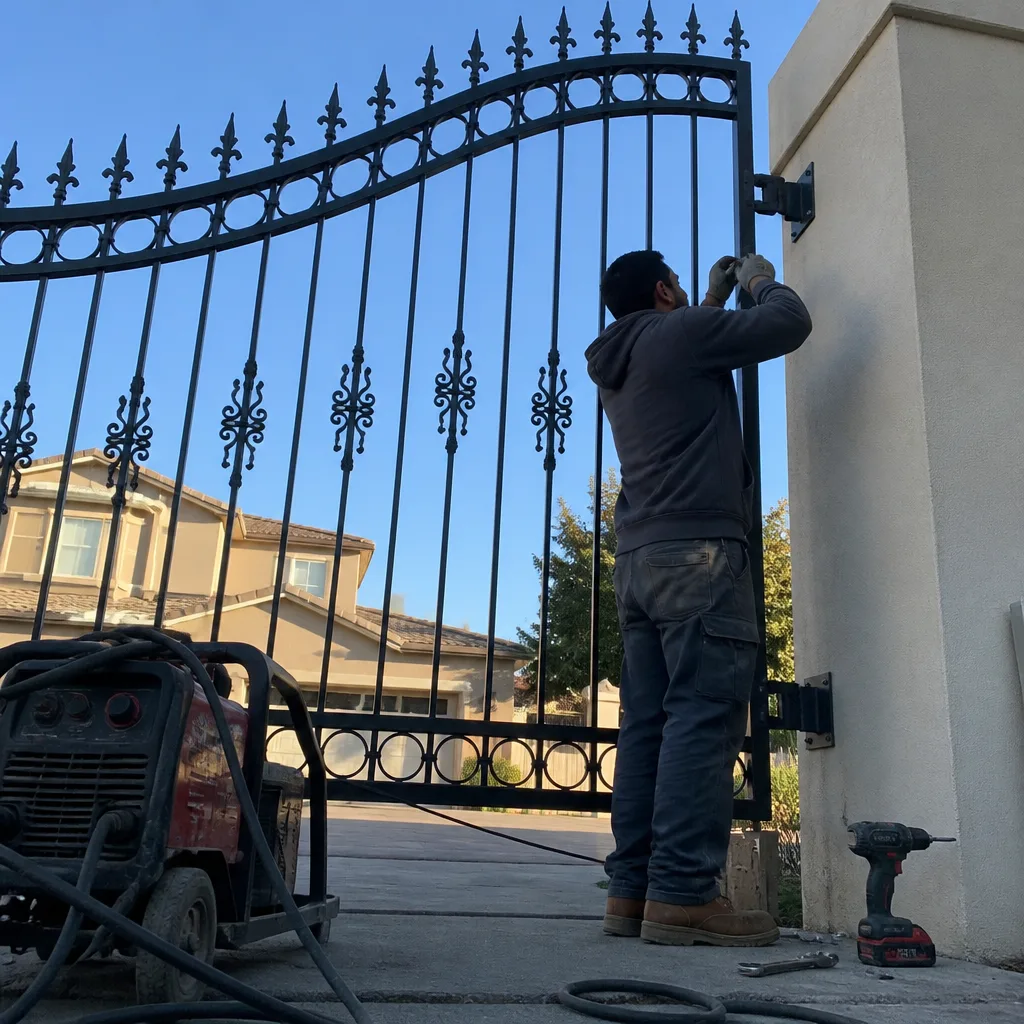
Some warning signs look small and turn out to be the last visible chapter before a complete failure. Based on field patterns across Sherman Oaks, here are the four that most often precede a full gate failure within roughly 60 days.
The gate stops halfway and resumes when you press the remote again
Homeowners read this as a remote battery issue or a weak signal. It’s usually a limit switch beginning to fail. The switch sends the “stop” command at the wrong point in the travel, and the second press is you manually overriding a garbage reading. Limit switches get worse, not better.
The gate closes fine but won’t open, or opens but won’t close
One-directional failure is often read as a programming quirk. It’s usually the first sign of a failing directional relay on the control board or a capacitor losing its ability to start the motor under load in one direction. The board is half-working. The other half is next.
The gate finishes its cycle and you hear a thunk from the operator housing a second later
That delayed thunk is the brake or the hold mechanism disengaging late. It means the stop logic is lagging the mechanical stop, which strains the gearbox with every cycle. In our experience, this is one of the most consistently underrated signs because it doesn’t affect daily function until suddenly it does.
Visible rust bubbles under the paint at the bottom rail of a steel gate
Rust bubbles under paint mean the metal is corroding from the inside, not the outside. By the time the paint bubbles, the section is already compromised. A bottom rail that’s rusting from the inside will eventually crack at the weld line, and a cracked bottom rail is a gate that’s holding itself together by habit. This is a structural Tier Two or Tier Three depending on the gate weight and the location of the bubbles.
For a broader look at how these failures get repaired, start with our Vance Gate Repair Sherman Oaks home page, which documents our repair approach and the documentation standard on every job.
Common Mistakes to Avoid
- Lubricating a gate that grinds. Grease masks the sound without fixing the alignment problem, and in some operators it traps metal shavings against the gear. The grind comes back louder in three weeks, now with a lubricant film on a component that needs replacement.
- Adjusting the limit switches yourself without photographing the original positions. A limit switch that’s set 12 degrees past travel is a diagnostic clue. Once it’s moved, the clue is gone and the technician has to guess what the original fault was. If you’re not sure, don’t touch it.
- Fixing a sagging gate by moving the latch plate. This is the most common DIY response in Sherman Oaks. The latch plate didn’t move. The gate sagged. Moving the latch plate just tells the gate it’s okay to keep sagging, and the hinge load gets worse while the latch aligns again.
- Running a gate that trips its breaker “just every once in a while.” Breakers don’t trip for no reason. Each trip is a current overload event, and each event degrades the motor windings. The once-a-week trip becomes a daily trip becomes a dead motor.
- Ignoring a gate that hesitates because “it’s been doing that for years.” Chronic hesitation is often a capacitor that’s been failing slowly enough to mask the trend. By the time it fails completely, the repair is a motor replacement rather than a capacitor swap.
- Calling an electrician instead of a gate technician for an operator fault. The problem lives in the operator’s low-voltage control logic, not the line voltage in the wall. An electrician will confirm the power is fine, which you already knew, and then the gate still doesn’t move.
- Waiting for a full failure before getting a written estimate. The repair is cheaper, faster, and less invasive when the component is mostly functional. The month you spend waiting is the month the capacitor finishes dying and takes the gearbox with it.
When to Call a Professional
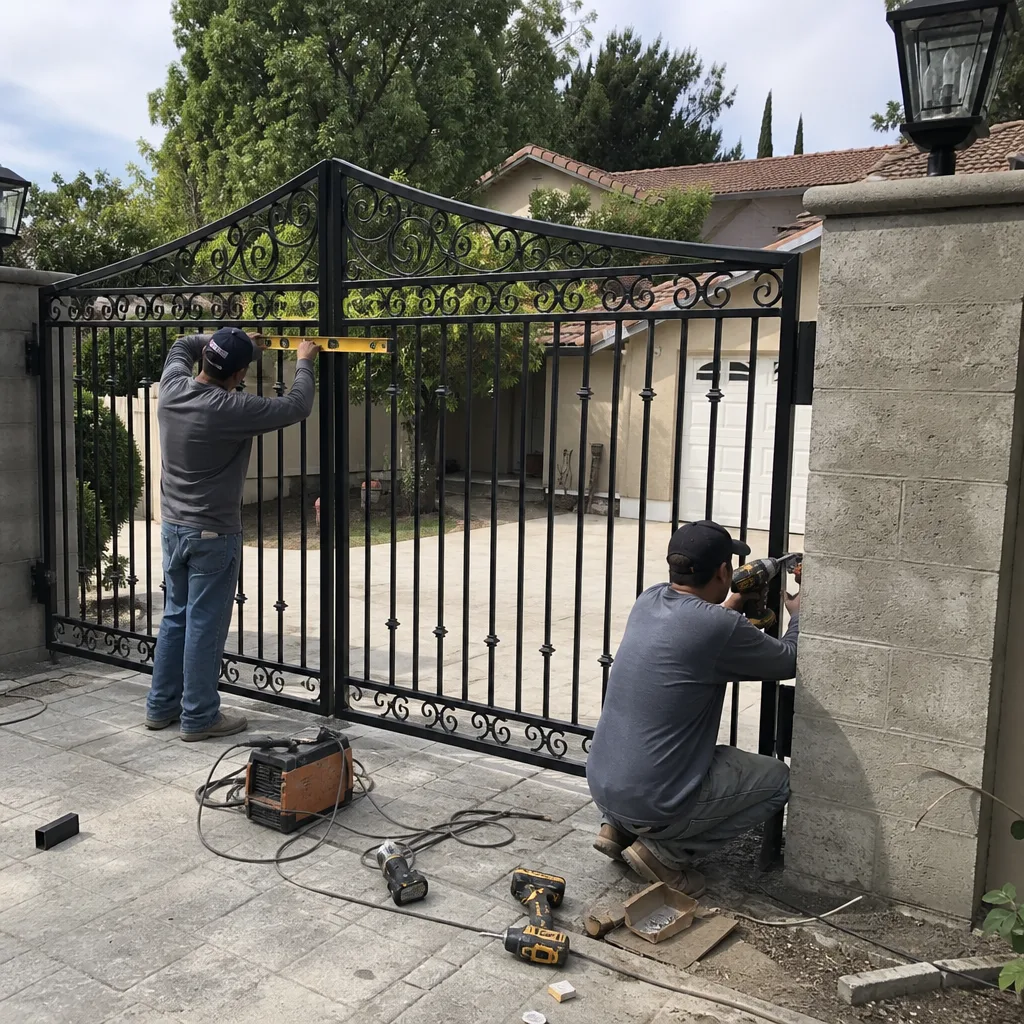
Call a technician the same day for any Tier Three sign: a reversing gate, a humming motor with no movement, visible structural sag, or any gate that moves without a command. Call within two weeks for persistent scraping, consistent breaker trips, one-directional failures, or occasional mid-travel reversals. Call for a written estimate before you start lubricating, adjusting, or realigning anything, because every adjustment you make erases diagnostic evidence the technician could have used. For more detail, see our guide on How to Hire a Gate Repair Contractor in Sherman Oaks: A Step-by-Step Guide.
Vance Gate Repair Sherman Oaks offers free estimates in Sherman Oaks, with the written price delivered before any work starts. Call (213) 463-6296 and speak to a live person, any hour. We’ll name the problem, name the price, and document what we found. For a broader look at what a full gate project involves, see our Gate Installation in Sherman Oaks page. If the operator is the issue, our Gate Motor & Opener in Sherman Oaks page covers the repair and replacement scope in detail.
Frequently Asked Questions
A gate that reverses mid-travel is the most dangerous warning sign because it means the safety loop or limit switch is sending false obstruction signals, which produces unpredictable movement on a structure heavy enough to cause serious injury. Stop using the gate and call for service the same day.
Most Sherman Oaks gate repairs fall between $250 and $900 depending on the component, with motor replacements running higher. A hinge replacement or alignment adjustment typically lands between $250 and $500, while a full operator replacement on brands like LiftMaster or FAAC usually runs between $800 and $1,600. The written price is always delivered before work starts, so the number you see is the number you pay. Call (213) 463-6296 for an exact quote; estimates are free.
The gate is receiving a false obstruction signal from a misaligned photo-eye, a faulting safety loop, or a limit switch that’s reporting the wrong position. The control board interprets that signal as something in the path and reverses. It’s a Tier Three condition if it happens every cycle and should be addressed immediately.
Motor problems involve sound, response, and electrical behavior: humming, clicking, intermittent operation, breaker trips. Structural problems involve geometry and metal contact: scraping, sagging, latch misalignment, visible rust at welds. The two systems fail differently and carry different repair costs, which is why photographing the symptom before calling helps a technician arrive with the right parts and the right plan.
No. Grinding is metal removing itself from the system, either in the drive gear or at a structural contact point. Every cycle accelerates the damage. Stop using it and schedule a repair; continuing to run a grinding gate typically turns a gear replacement into a motor replacement within a few weeks.
Yes. Sherman Oaks sees enough temperature swing across the year to affect hydraulic fluid viscosity and capacitor performance in older operators. Dry-season soil movement on hillside lots also shifts gate posts slowly, which produces scraping and latch misalignment that appears unrelated to the operator itself. These are local patterns we account for on every Sherman Oaks diagnostic call. For a full maintenance calendar, see Seasonal Gate Repair Care for Sherman Oaks: Year-Round Homeowner’s Guide.
The Bottom Line
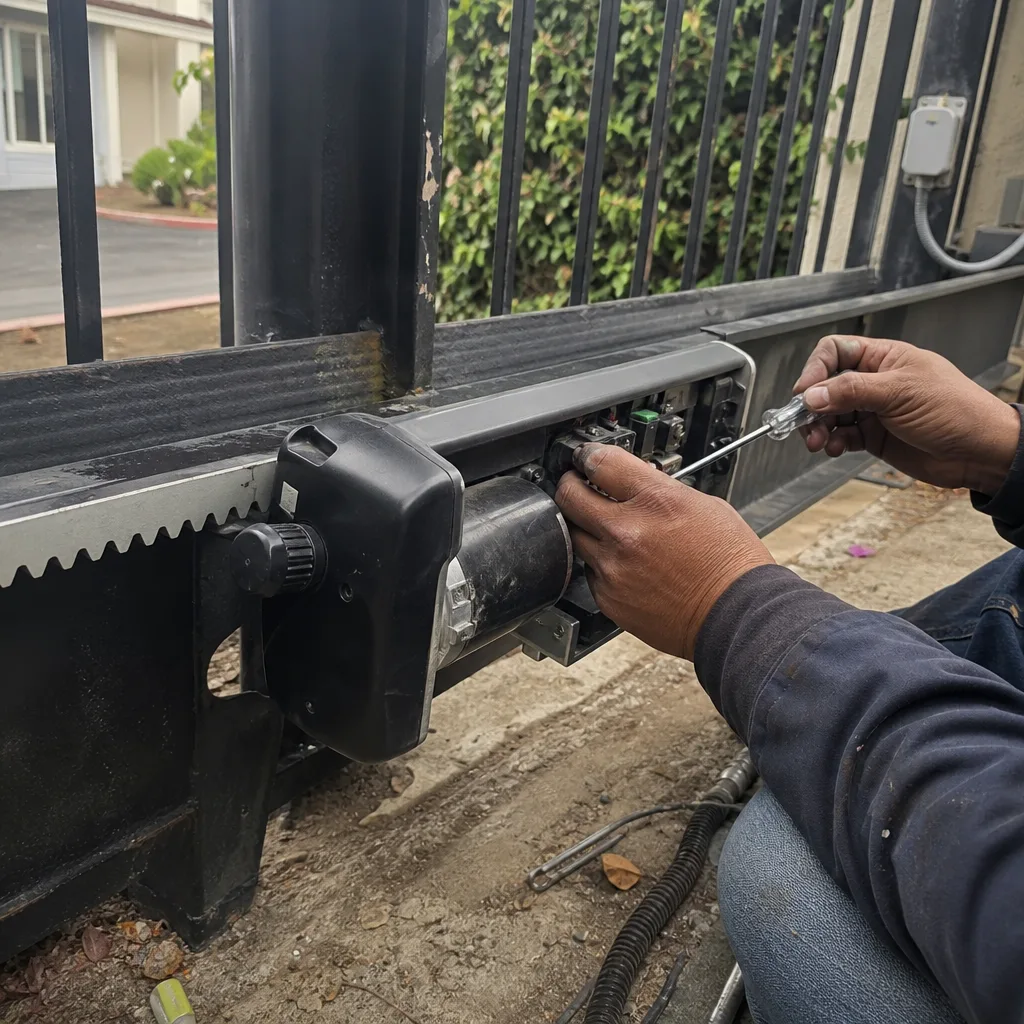
Gate warning signs are not all the same urgency, and the homeowner who earns the cheaper repair is the one who sorts each sign into its tier and acts on the tier, not on the mood of the moment. Monitor the small stuff with a photo log and a 30-day check-in. Schedule the consistent stuff within two weeks. Stop the gate and call today for reversing, humming, sagging, or unprompted movement. The record you keep is worth money because it means the technician spends the first hour diagnosing instead of rediscovering. And the written estimate you get before work starts means the price you agree to is the price you pay. That’s the whole game in Sherman Oaks. For more guides & resources, visit our blog.
If you’re seeing any of the signs in this guide, call Vance Gate Repair Sherman Oaks at (213) 463-6296 for a free estimate. A live person answers, day or night, and the price is in writing before anyone picks up a tool.
Written by Adrian Vance, Owner at Vance Gate Repair Sherman Oaks, serving Sherman Oaks since 2014.