
Last updated September 20, 2026
Free on-site gate assessment - hinges, posts, and your LiftMaster or Nice gate operator checked before anything is quoted
The assessment is free and the quote is the invoice.
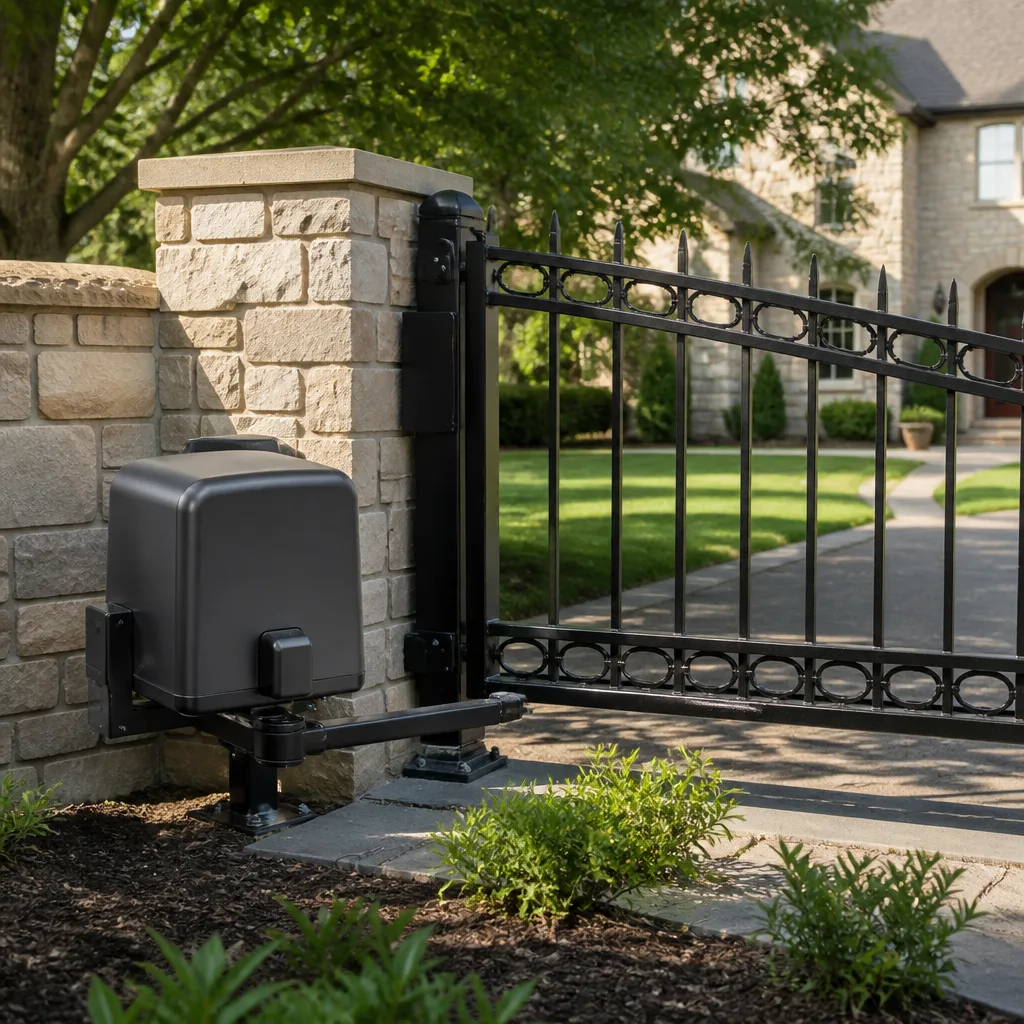
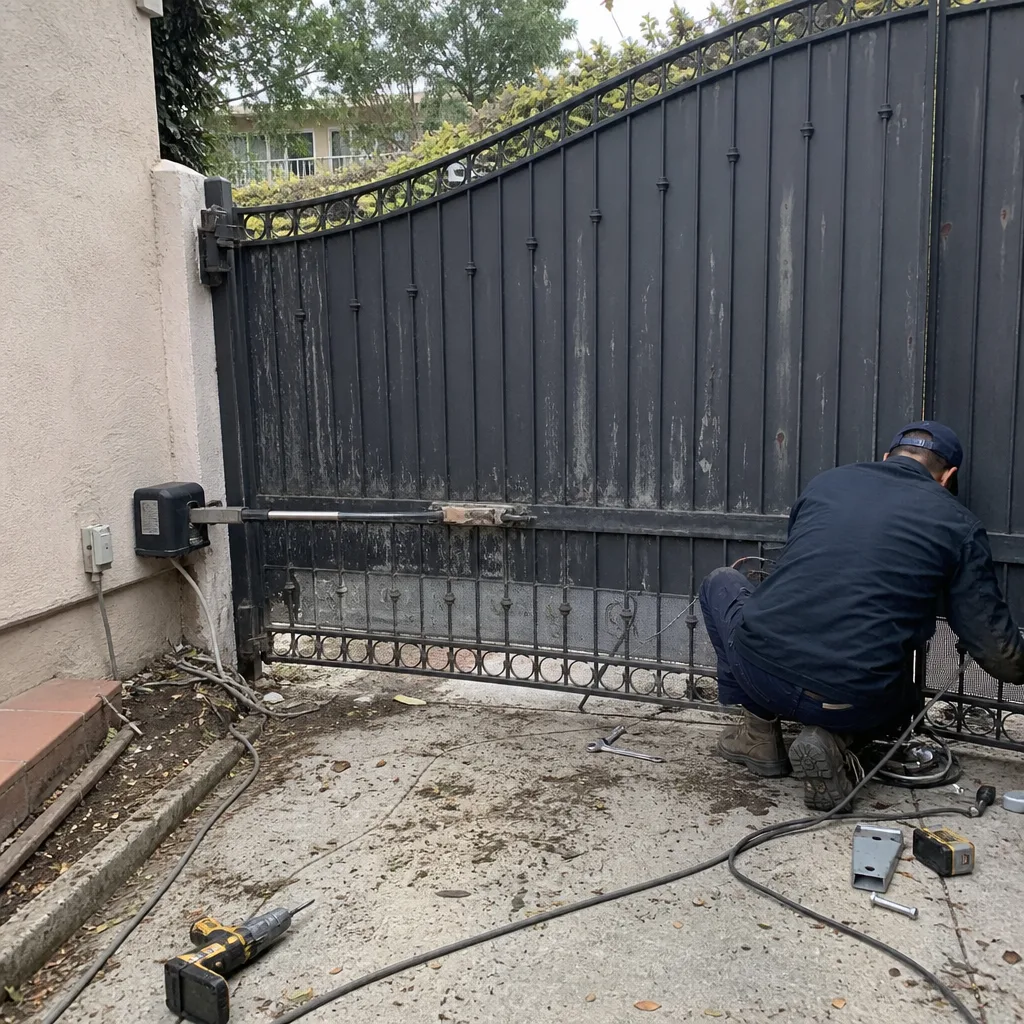 Before
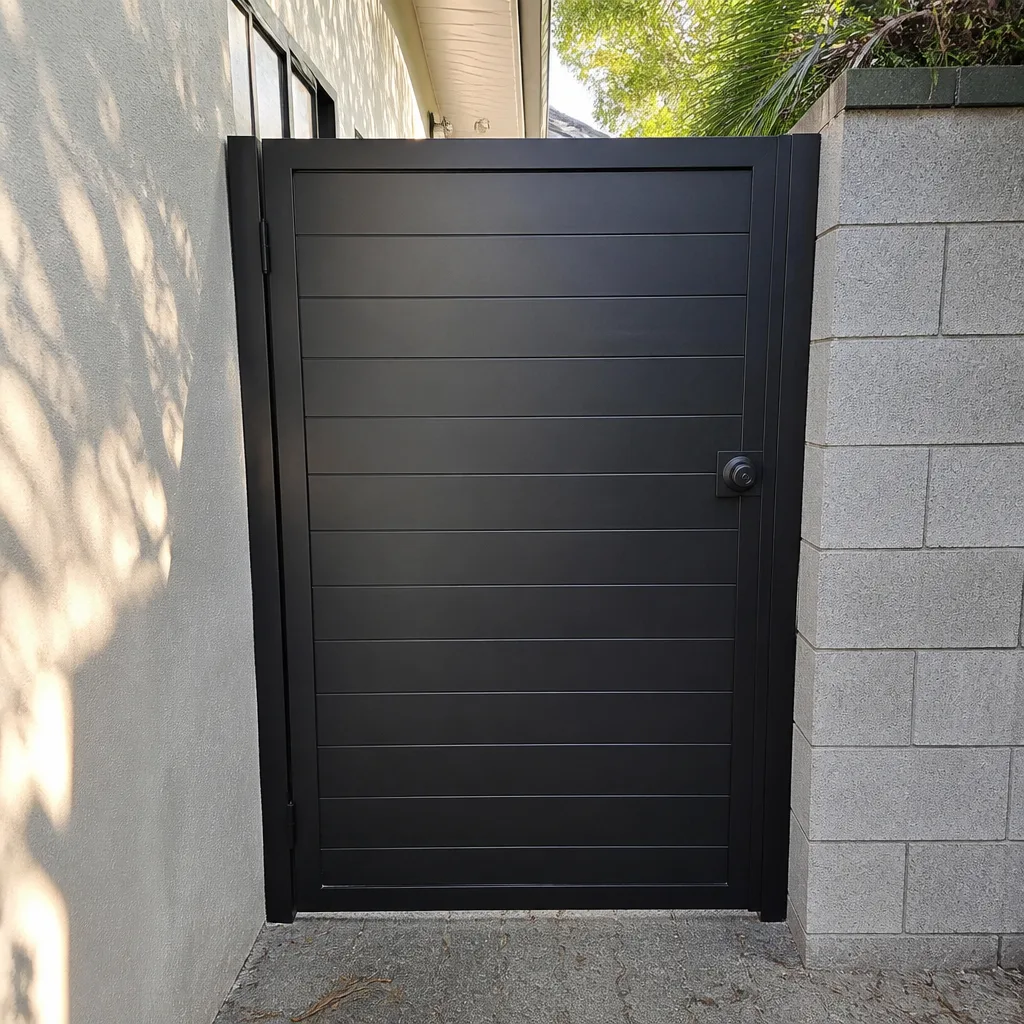 After
After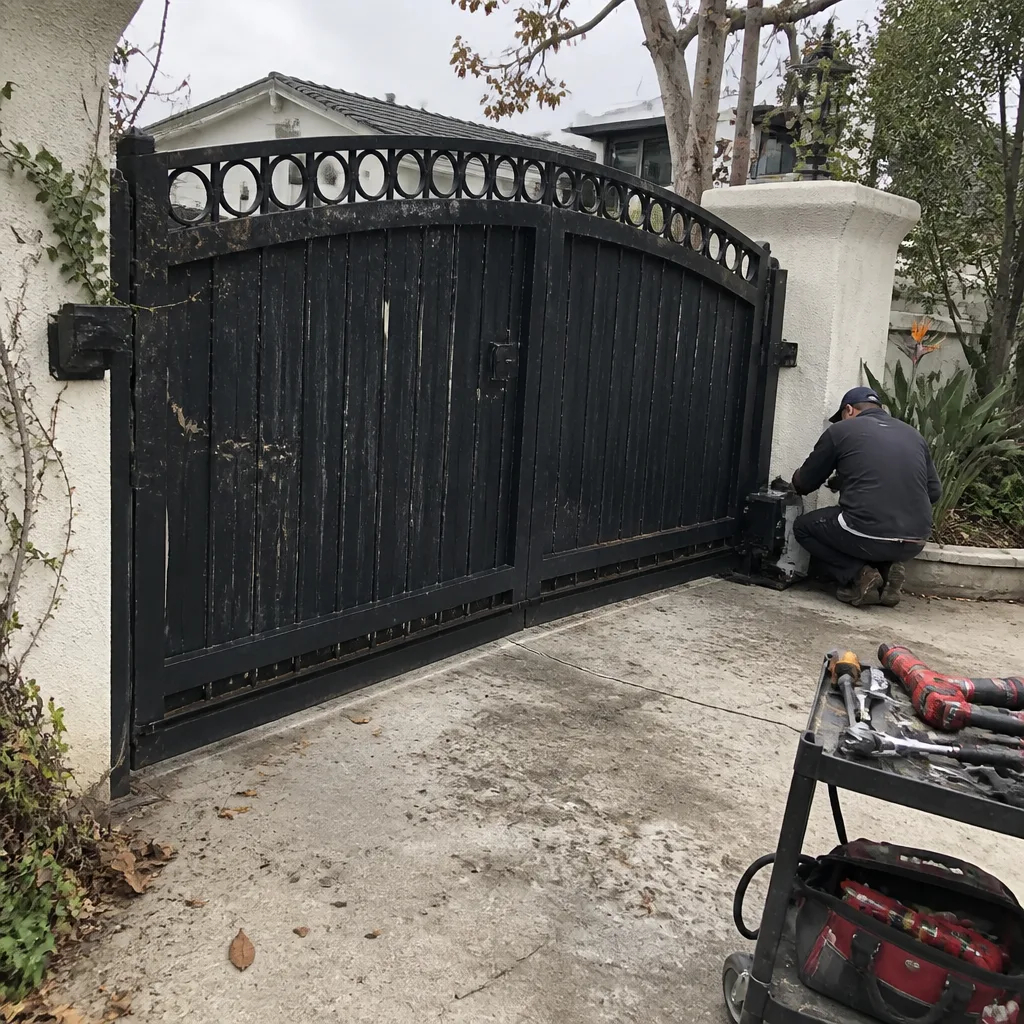 Before
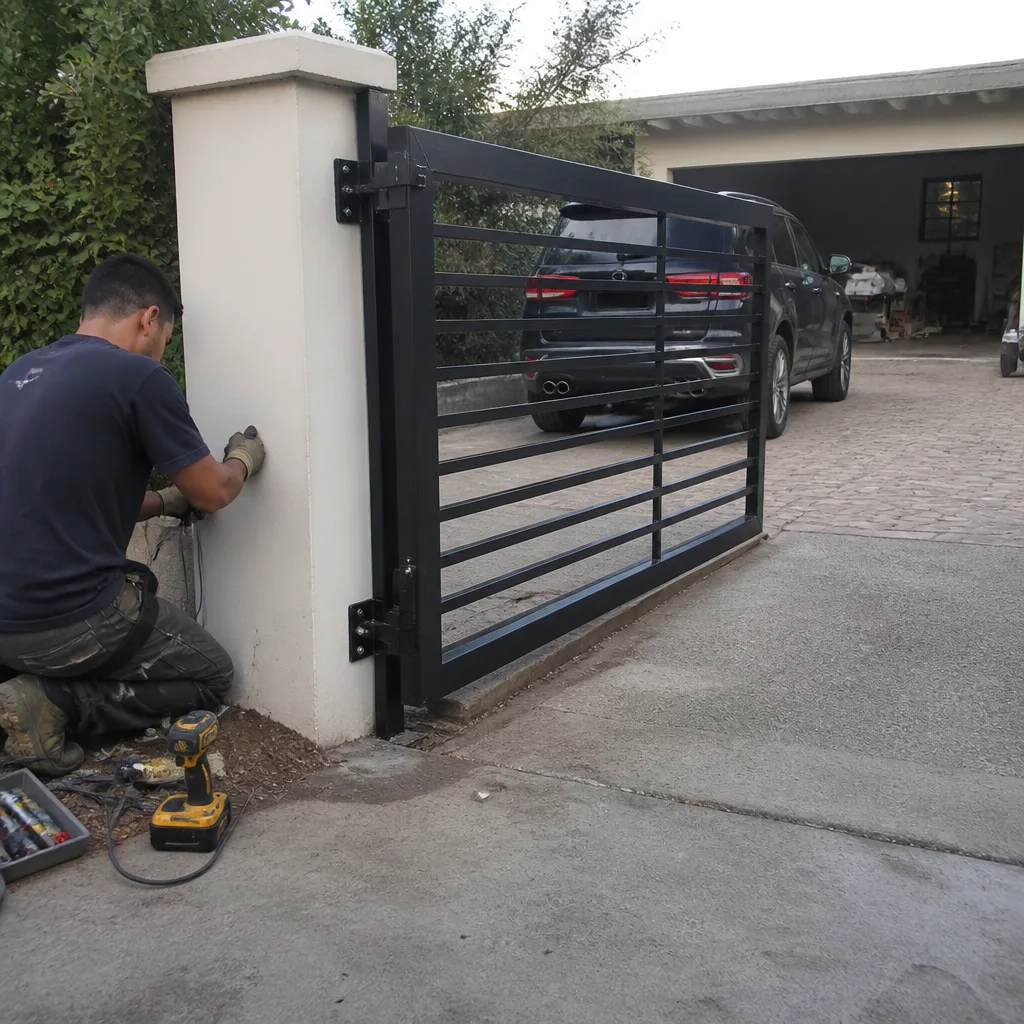 After
After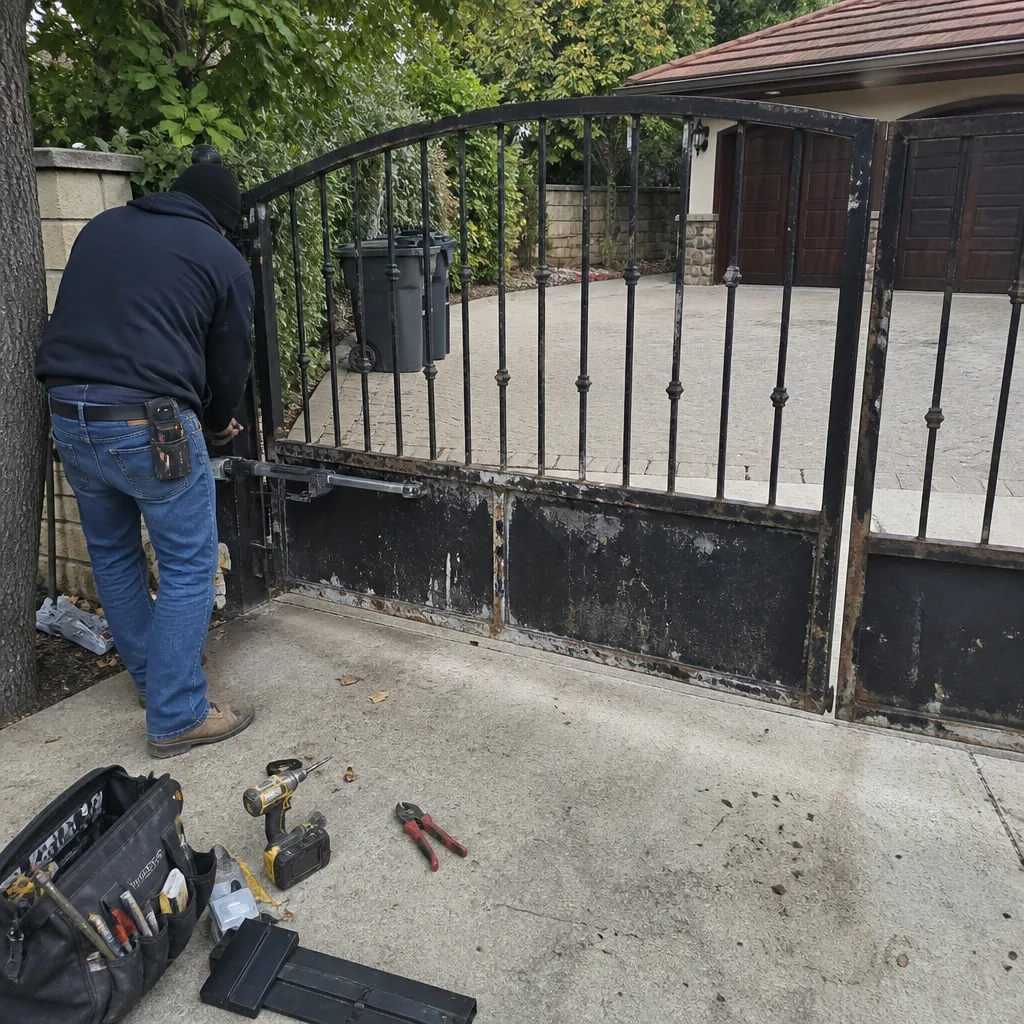 Before
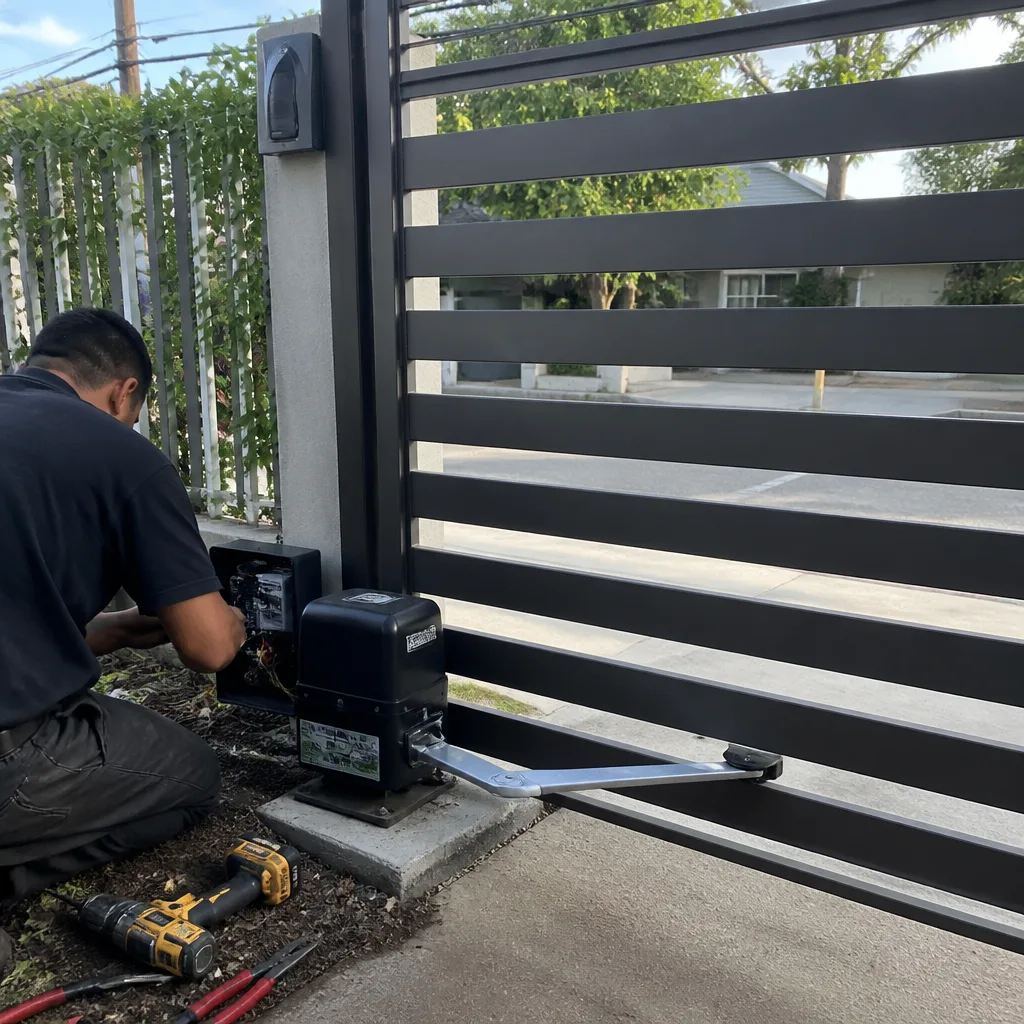 After
AfterSeasonal Gate Repair Care for Sherman Oaks: Year-Round Homeowner’s Guide
In Sherman Oaks, the month most likely to produce a gate call isn’t January. It’s November, when Santa Ana winds load drive gears with dried debris and pre-storm voltage spikes trip control boards across the Valley. That failure pattern is specific to this geography and doesn’t appear in any national gate-maintenance calendar. This guide explains the three stress periods that actually matter for driveway and pedestrian gates in Sherman Oaks, what breaks during each, what to check before each one arrives, and how to keep a seasonal log that saves you money on every future Gate Repair services call.
Quick Answer
Seasonal gate care in Sherman Oaks means preparing for three distinct stress periods: Santa Ana wind season (October through December), winter rain (January through March), and summer heat (July through September). Each stresses different components. Clearing drive-gear debris and logging limit-switch positions before November, checking post footings and drainage after January rains, and testing battery backup capacity under load before August heat are the three highest-value maintenance moves a homeowner can make.
Table of Contents
- The Three Sherman Oaks Stress Periods (Not Four Seasons)
- Before Santa Ana Season: Drive Gear Debris and Limit-Switch Logging
- Winter Rain and Concrete Post Footings: Early Signs of Post Shift
- Summer Heat and Battery Backup Systems: Test Under Load, Not After Failure
- How to Create a Seasonal Log That Every Technician Will Thank You For
- Common Mistakes to Avoid
- When to Call a Professional
- Frequently Asked Questions
 Before
 After
AfterThe Three Sherman Oaks Stress Periods (Not Four Seasons)
Sherman Oaks doesn’t have four distinct seasons, but it does have three stress periods for gate hardware, and each one attacks different components. National gate-maintenance calendars talk about winterizing and spring tune-ups, which means almost nothing at this latitude. What actually matters here is wind, water, and heat, arriving in that order every year.
Santa Ana wind season (October through December): sustained gusts push dried eucalyptus leaves, palm fronds, and fine dust into gate tracks, drive gears, and photo-eye housings. The debris is abrasive. We regularly see swing-gate drive gears in Sherman Oaks where a half-inch of packed leaf matter has hardened against the gear teeth, forcing the motor to work harder and eventually stripping plastic drive components. The wind also brings voltage instability. Power flickers during wind events are common in the Valley, and a control board that loses power mid-cycle can corrupt its limit-switch memory. That’s the November call we get most often: a gate that was working fine in October suddenly stops mid-travel or reverses for no apparent reason.
Winter rain (January through March): Sherman Oaks sits on slopes and alluvial soil that expands measurably when saturated. Concrete post footings poured at shallow depth, which is common in residential installations, can shift by an eighth to a quarter inch after sustained rain. That doesn’t sound like much, but a quarter inch at the post base translates to an inch or more at the top of a seven-foot gate leaf. Hinges bind. Latches stop aligning. Photo-eyes that were pointed directly at each other in September are suddenly two inches off-axis in February.
Summer heat (July through September): battery backup systems, which keep your gate operational during a power outage, degrade faster in sustained heat. A sealed lead-acid battery sitting in a metal control box on a 105-degree Sherman Oaks afternoon in full sun can reach internal temperatures well above its rated operating range. Capacity drops. The battery may still show a green “ready” light on the control board while holding only a fraction of its rated charge. The first time it’s actually needed, during a summer rolling blackout, the gate stalls halfway open. That’s a failure you can prevent with a fifteen-minute load test in June.
Understanding these three periods is the foundation of seasonal care here. The rest of this guide walks through exactly what to do before each one arrives, or you can explore more guides & resources on gate maintenance.
Before Santa Ana Season: Drive Gear Debris and Limit-Switch Logging
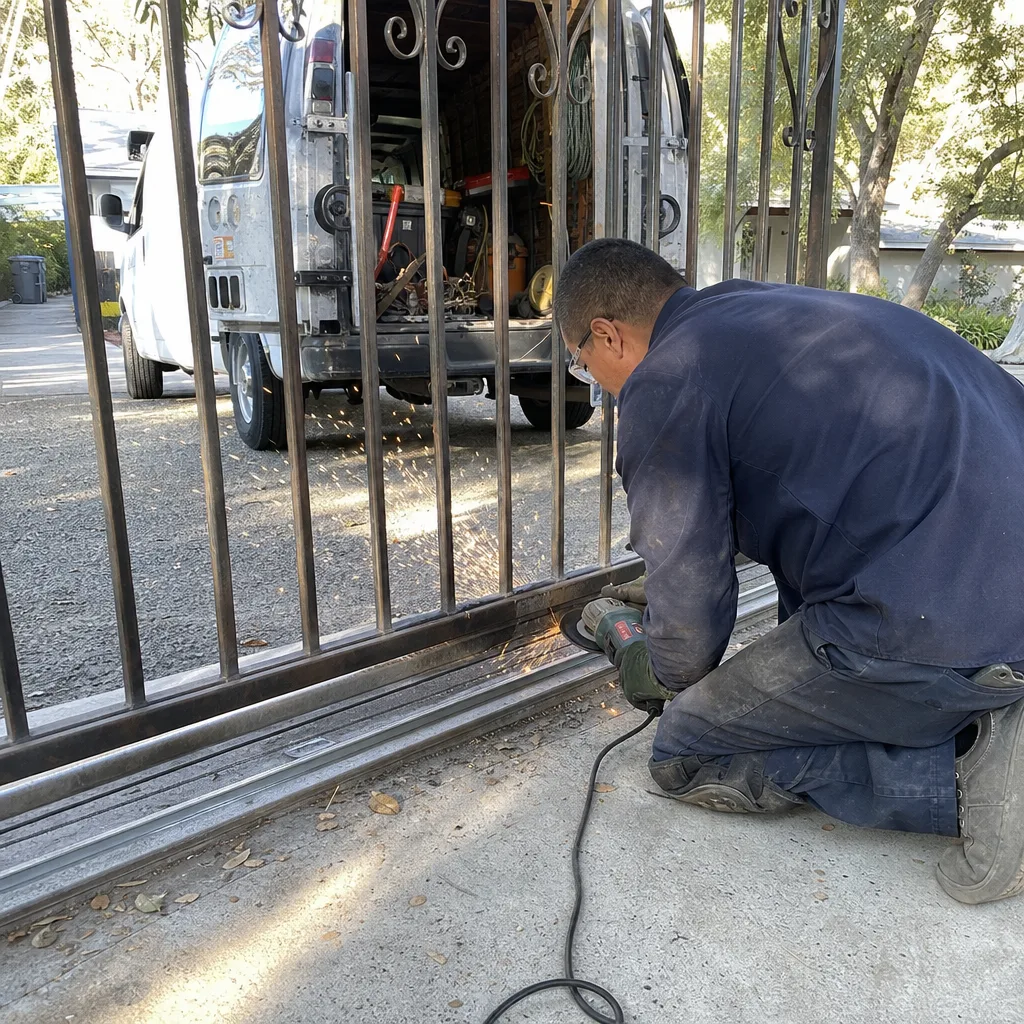
Santa Ana winds in Sherman Oaks can gust to 50 mph or more, carrying debris off the hills and into every mechanical opening on your property. For a gate, the two components at highest risk are the drive gear and the limit switch, and both can be addressed in a single prep session before the winds start in earnest.
Step one: clear the drive gear. On a swing-gate operator, the drive gear is where the motor’s output shaft meets the arm that pushes the gate leaf. On a slide gate, it’s the rack and pinion along the track. In either case, wind-driven debris accumulates in the teeth. Turn off power to the operator at the breaker or disconnect switch before you touch anything. Then remove the cover and look at the gear face. If you can’t see metal between the teeth because of packed debris, that’s a problem worth addressing now, not after the motor burns out in November. Use a stiff nylon brush, not a screwdriver, to clear the teeth. A screwdriver can nick the gear surface and create a new wear point. Blow out the housing with compressed air if you have it, or use a vacuum with a narrow attachment.
Step two: log the limit-switch position. The limit switch tells the operator where the gate’s open and closed positions are. It’s a mechanical or magnetic contact that gets set during installation and normally doesn’t need adjustment. But when power flickers during Santa Ana events, the control board can lose its stored positions. When that happens, the gate over-travels and slams into the stop, or under-travels and leaves a gap at the latch. We reset limit switches on Sherman Oaks gates more often in November and December than in any other two-month window of the year.
Before wind season, note where the gate stops at its open and closed positions. Photograph the gap at the latch when closed, and photograph the angle of the leaf when fully open. Those two photos are your baseline. If the gate behaves differently after a wind event, you’ll know within a day instead of discovering the problem when the gate won’t latch at all. This is the same documentation habit we bring to every Gate Repair in Sherman Oaks visit: a written record of what was found, what was set, and what changed. You can do the same thing on your own gate in about ten minutes.
Step three: check the photo-eyes. A photo-eye is the infrared beam that stops the gate if something crosses the path. On a windy day, a single palm frond can knock a photo-eye housing two degrees out of alignment. The gate interprets the misalignment as an obstruction and refuses to close, or reverses immediately after closing. Most residential photo-eyes have an alignment LED: solid green or solid red means aligned, blinking means misaligned. Check both eyes during your pre-wind-season walkthrough. If one is blinking, the fix is usually a few degrees of adjustment at the mounting bracket. This is a safe, low-risk adjustment that doesn’t require touching the motor or the springs.
One more note for Santa Ana season: if you have a slide gate, check the track for debris after any major wind event. A single dried palm frond wedged in the track will stall the gate and trip the obstruction sensor. Clearing it takes seconds. Diagnosing it over the phone can take much longer.
Winter Rain and Concrete Post Footings: Early Signs of Post Shift
Winter rain in Sherman Oaks does something specific to gate posts that doesn’t show up in drier inland communities: the soil expands, posts shift, and gates that were perfectly aligned in October stop latching in January. The mechanism is straightforward. Sherman Oaks sits on sandy loam and alluvial deposits that absorb water readily and expand when saturated. A concrete footing poured at eighteen inches deep, which is common for residential driveway gates, sits in the zone most affected by moisture fluctuation. As the soil expands and contracts through wet and dry cycles, the footing moves. The post moves with it.
The early signs of post shift are subtle and worth knowing:
- The latch gap changes. If the gap between the gate leaf and the latch post is visibly wider or narrower than it was in the fall, the post has moved. A quarter inch at the base becomes an inch at the latch.
- The gate drags or scrapes at a single point. When a post shifts, the gate leaf tilts slightly, and one corner of the leaf contacts the ground or the post at a specific point in its travel. You’ll hear it as a scrape, not a squeal.
- The hinges show fresh wear on one edge. Look at the hinge pins. If they’re wearing unevenly, shinier on one side than the other, the gate is no longer swinging true.
- The photo-eyes go out of alignment with no apparent cause. When the post the photo-eye is mounted on shifts, the beam misses its receiver even though nothing touched either unit. We see this regularly after January rains in Sherman Oaks.
What should you actually do before the rains start? Three things. First, check your post caps. A missing or cracked post cap lets water enter the post interior, where it sits against the anchor bolts and accelerates rust. Replace missing caps, and seal the seam with silicone if the cap is loose. Second, check the drainage around the post base. If water pools against the footing after a rain event, the soil saturation is going to be worse at that post than elsewhere. Regrading the area so water runs away from the footing, even by an inch or two, is a cheap intervention. Third, log your latch gap and photo-eye alignment in October, before the first significant storm. You need a baseline to detect post shift early, and a photo on your phone is enough.
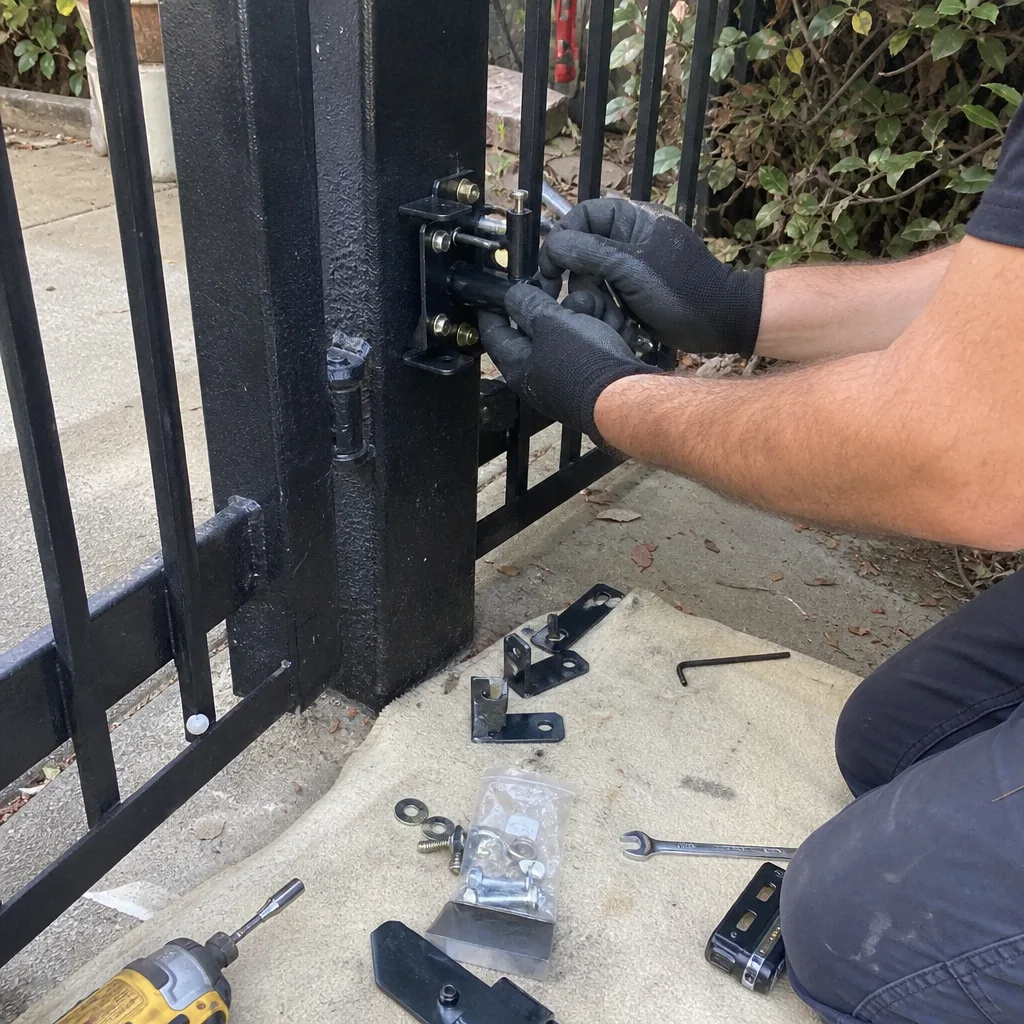
If you do see post shift after a heavy rain season, the fix is usually post re-setting or shimming at the hinge, not gate replacement. We’ve reset posts on Sherman Oaks gates where the homeowner had been told by another company that the entire gate needed to be replaced. The post was shifted. The gate leaf was fine. A Gate Installation in Sherman Oaks company that leads with replacement instead of repair isn’t doing you any favors, especially when the problem is a footing issue.
Summer Heat and Battery Backup Systems: Test Under Load, Not After Failure
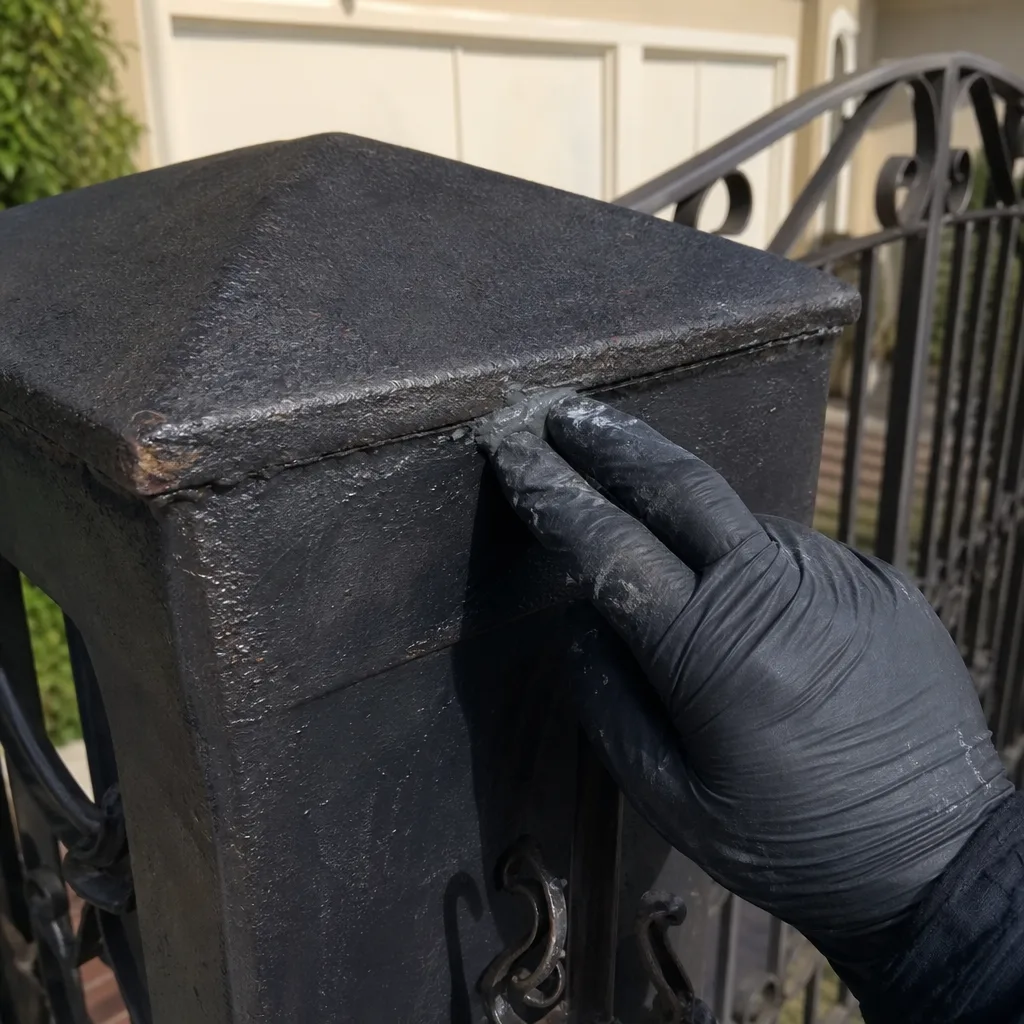
Battery backup systems on automated gates exist for one reason: to keep the gate operational when utility power drops. In Sherman Oaks, where summer heat waves coincide with grid stress, that backup matters more than in coastal communities. The problem is that heat degrades battery capacity silently. A battery that tests at 13.2 volts with no load can still be unable to move a 400-pound gate leaf through a full open-close cycle. Voltage without amperage is meaningless. We see this every summer: a homeowner presses the remote during an outage, the gate moves six inches, and everything stops. The battery was already dead. They just didn’t know it until the moment they needed it.
The fix is simple and worth doing in June, before the hottest months arrive. Here’s the load test we recommend:
- Check the battery’s date code. Most sealed lead-acid backup batteries last three to five years in Southern California heat. If yours is older than that, replace it before the heat wave, not during it.
- Inspect the battery for swelling. A swollen case means the battery has overheated at some point. Replace it. A swollen battery in a metal control box is a legitimate fire hazard.
- Disconnect utility power at the breaker. The gate should beep or show a status light indicating backup power. Now operate the gate. It should open and close fully, at normal speed, at least three times. If it slows on the third cycle or stalls entirely, the battery’s capacity is degraded.
- Reconnect utility power. Note the results in your seasonal log, including the battery’s date code and the number of full cycles it completed.
This is a forty-minute job start to finish, and it tells you definitively whether your backup will work when the power drops in August. Most Sherman Oaks homeowners never do this test, which is why July and August are our busiest months for Gate Motor & Opener in Sherman Oaks calls that turn out to be dead batteries, not dead motors.
Heat also affects the operator itself. Motors running in a sealed metal housing on a 105-degree afternoon have a higher thermal load than at any other time of year. The thermal overload protector on a residential gate operator is more likely to trip in July than in February, and when it trips, the gate stops mid-cycle and refuses to operate until the motor cools. If your gate stops working on a hot afternoon and works fine the next morning, that’s thermal overload, not a component failure. It’s still worth a service call, because repeated thermal trips shorten motor life, but it’s a different diagnosis than a dead capacitor or a stripped gear.
How to Create a Seasonal Log That Every Technician Will Thank You For
A seasonal log is the cheapest insurance policy you can buy for a gate system, and it costs nothing but ten minutes three times a year. The concept is simple: record the condition of key components on a fixed schedule, with photos, so that any future problem can be traced back to when it started. When we arrive at a Sherman Oaks gate that has a log, the diagnosis is almost always faster, which means the repair is cheaper, because we’re not spending time discovering what the homeowner already documented.
Here’s the log format we recommend, and it’s the same format we use internally on every job:
- Date and season. October (pre-wind), February (post-rain), June (pre-heat). Three entries per year is enough. More is fine.
- Three photos. The latch gap with the gate closed, the photo-eye alignment from a fixed vantage point, and the drive gear or track with the cover off. Same angles every time so the photos are comparable.
- Three measurements. Latch gap in inches or millimeters, photo-eye alignment (aligned/misaligned and by roughly how much), and battery test results if you do the load test. Write them down. Don’t rely on memory.
- One line of notes. Anything unusual you noticed: “gate slowed slightly on closing,” “latch post looks tilted,” “heard a scrape at mid-travel.” Even a vague note has diagnostic value later.
Keep the log in a notebook, a Notes app, or a folder in your photo library. The format matters less than the consistency. What matters is that when a technician shows up in November because the gate won’t close, you can hand over six months of documented history instead of saying “it was working fine until now.” That documentation habit is a core part of how we operate at Vance Gate Repair Sherman Oaks home. Under Clause 4 of the Haven Standard, every visit we make includes a documented photo record of what was found, what was adjusted, and what was installed, left with the homeowner and filed in the job record. A homeowner who keeps the same record between visits is a technician’s best customer, and the log you keep will tell the next person who works on your gate exactly what we would have documented ourselves.
Your seasonal log also protects you when you’re getting estimates. A written history of what was checked and when prevents a technician from recommending work that’s already been done or diagnosing a problem that has a documented timeline. It’s harder to sell an unnecessary replacement when the homeowner has a photo log showing the gate in good operating condition six months earlier.
Common Mistakes to Avoid
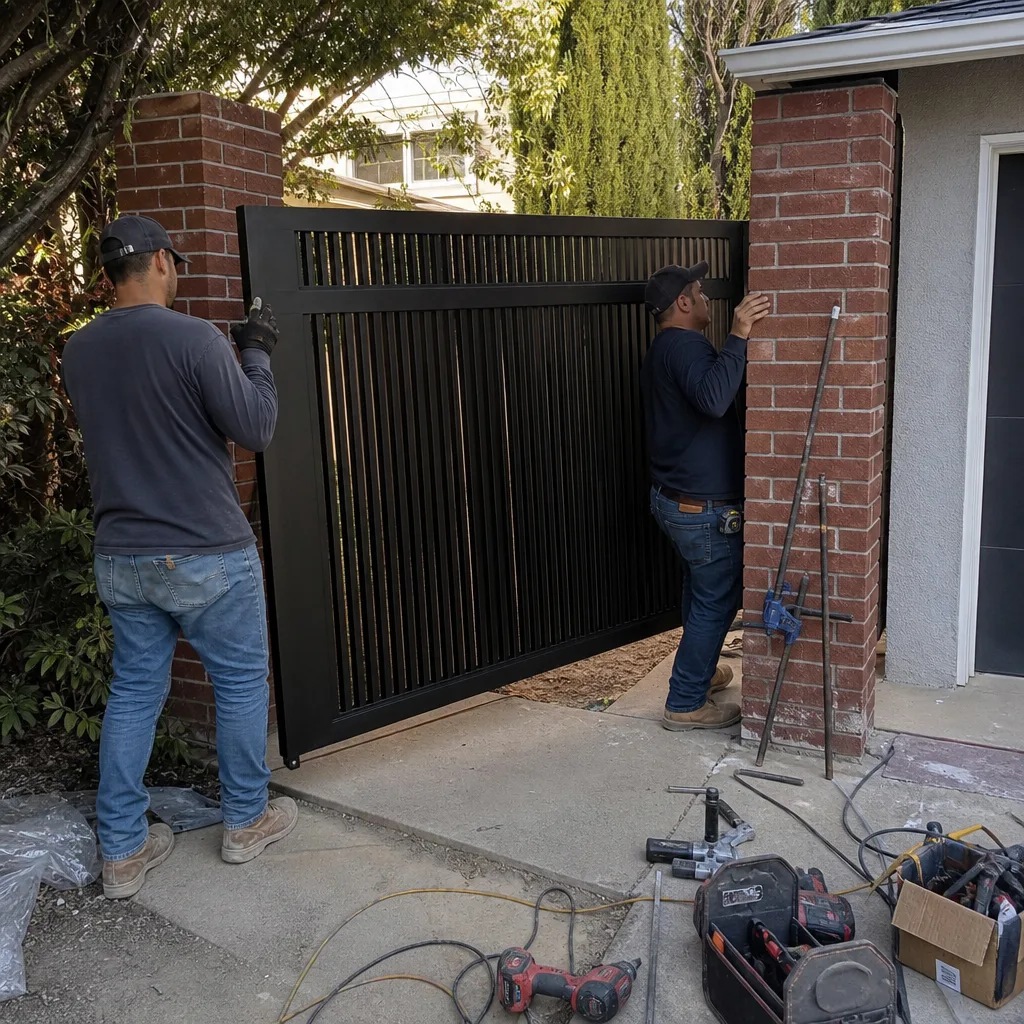
- Ignoring the gate during Santa Ana season because “it’s not a rain problem.” Wind debris is the most common cause of November gate failures in Sherman Oaks. Clearing the drive gear and checking photo-eye alignment before the winds start costs nothing and prevents the majority of wind-season calls.
- Lubricating everything with WD-40. WD-40 is a solvent, not a long-term lubricant. It washes existing grease out of hinges and gears and leaves them drier than before. Use a white lithium grease on metal-on-metal contact points, and never lubricate a belt or a clutch surface.
- Testing a backup battery with a multimeter only. Voltage without load means nothing. A battery that shows 13.2 volts at rest can collapse the moment the motor draws current. Run the load test described above, not a meter reading.
- Assuming the gate needs replacement when the post has shifted. Post shift after winter rains is common on Sherman Oaks lots with expansive soil. The fix is re-setting the post or shimming the hinges, not buying a new gate. Get a second opinion before anyone tells you the gate is beyond repair.
- Adjusting limit switches without recording the original position. If you move a limit switch even a quarter of an inch, you’ve changed the gate’s travel range. Without a before-photo or a before-measurement, the next technician has to calibrate from scratch. Take the baseline photo before touching anything.
- Skipping the post-rain inspection because the gate still opens and closes. Post shift is gradual. A gate can operate fine with a shifted post until the day a hinge binds hard enough to bend a leaf or stall the motor. If the latch gap changed after January rains, that’s your signal to act.
- Replacing a gate motor before checking the battery backup. A gate that stalls during a heat-related power flicker but works normally the rest of the time may have a dead backup battery, not a failed motor. The motor replacement costs far more, and it wouldn’t fix the actual problem.
When to Call a Professional
Some seasonal work is safe and straightforward to do yourself: clearing debris from a drive gear, checking photo-eye alignment, running a battery load test, logging latch-gap measurements. Other work involves components that can cause serious injury if mishandled. If your gate has a high-tension spring, a counterweight system, or a chain drive under load, do not attempt to adjust or remove any of those components yourself. These assemblies store enough energy to cause severe injury if they release unexpectedly. We recommend a trained professional for any repair that involves springs, cables, counterweights, or the internal mechanism of a gate operator. If you’re in Sherman Oaks and you’re not sure whether a job is safe to handle yourself, read our DIY vs Professional Gate Repair: The Sherman Oaks Homeowner’s Decision Guide, then call us. Vance Gate Repair Sherman Oaks offers free estimates in Sherman Oaks, and we’ll tell you honestly whether it’s a ten-minute homeowner job or a service call. Call (213) 463-6296.
Frequently Asked Questions
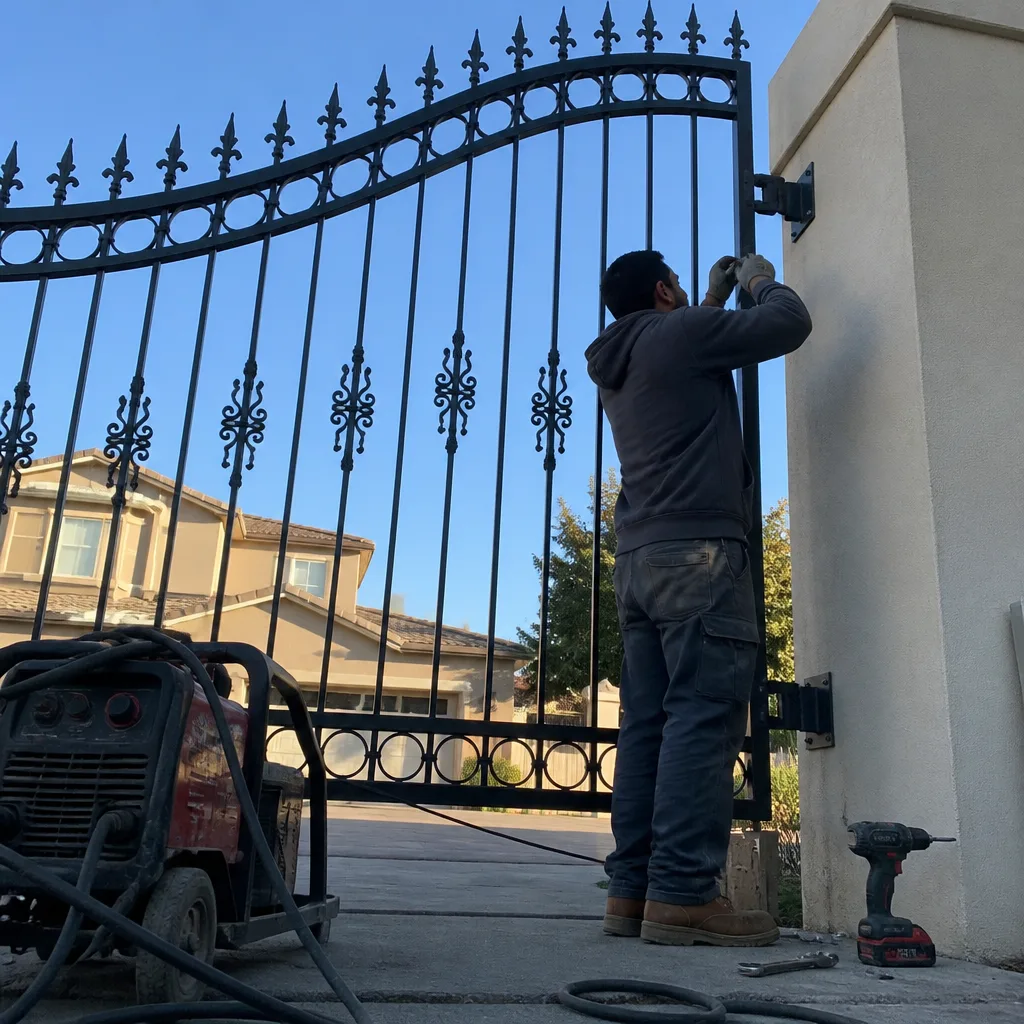
Three times a year, aligned with the stress periods: October before Santa Ana winds, February after winter rains, and June before summer heat. Each check focuses on different components, and each takes less than an hour. That cadence matches what we recommend for every Sherman Oaks gate we service, and it catches most failures before they happen. Call (213) 463-6296 if you’d rather have us handle the checks.
The most common cause is debris in the drive gear or track, followed by photo-eye misalignment from wind-borne branches and power flickers that corrupt the limit-switch memory on the control board. All three are preventable with a pre-wind-season inspection that clears debris and logs baseline positions. If it keeps happening despite your prep, there may be a wiring connection that’s loosening under vibration, and that’s a service call.
Yes. Sherman Oaks soil expands when saturated, and shallow concrete footings, which are standard on many residential gate installations, move with the soil. The movement is small, typically an eighth to a quarter inch per season, but it’s enough to change latch-gap alignment and bind hinges. If you notice a changed latch gap after heavy rains, the fix is usually post re-setting, not gate replacement.
Run a load test: disconnect utility power at the breaker, operate the gate through three full open-close cycles, and watch for slowing or stalling on the third cycle. If it stalls, the battery capacity is degraded and it should be replaced before summer heat arrives. A multimeter voltage reading alone won’t tell you this, because voltage without amperage doesn’t indicate whether the battery can actually move the gate.
Repair first, unless the gate leaf itself is rusted through or structurally compromised. Post shift, hinge wear, photo-eye misalignment, and dead batteries are all repairable at a fraction of replacement cost, and a competent technician should recommend repair before replacement for any of those issues. Get a written estimate that specifies what’s being fixed and what the repair accomplishes. Vance Gate Repair Sherman Oaks offers free estimates at (213) 463-6296, and the written price you receive before work starts is the price you pay.
We service nine major gate-automation brands: LiftMaster, FAAC, BFT, Linear, Viking, Ghost Controls, DoorKing, Elite, and Mighty Mule. If your gate has a FAAC motor and the drive arm bracket is intact, we’ll repair the FAAC, not steer you toward a replacement. If you have a Viking or a Linear operator, same approach. The brand on the property is the brand we service, and the written estimate will specify exactly what’s being serviced. Call (213) 463-6296 for a free estimate.
The Bottom Line
Seasonal gate care in Sherman Oaks comes down to three dates on your calendar: October, February, and June. For a deeper look at local repair strategies, see The Complete Guide to Gate Repair in Sherman Oaks. Before the winds, clear the drive gear and log your limit-switch positions. After the rains, check your post footings and latch gap for the early signs of shift. Before the heat, run a load test on your battery backup so you know it will work when the power drops. Keep a simple log with dates, photos, and measurements, and you’ll have a documented history that makes every future repair faster and cheaper. If a job involves springs, cables, or counterweights, call a professional. Vance Gate Repair Sherman Oaks serves the Sherman Oaks area with written pricing, documented photo records on every visit, and free estimates. Call (213) 463-6296 any time, day or night. A live person answers.
Written by Adrian Vance, Owner at Vance Gate Repair Sherman Oaks, serving Sherman Oaks since 2014.